

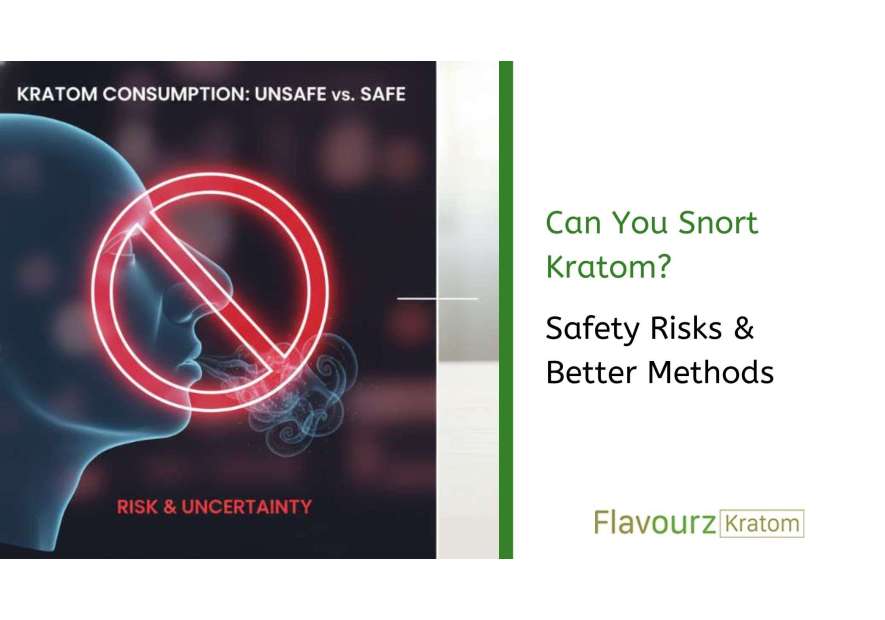
Can You Snort Kratom? Safety Risks & Better Methods
The conversation around kratom consumption methods is broad and varied. Many individuals seek information on different ways to use this botanical. Amidst these inquiries, questions about snorting kratom sometimes arise, driven by curiosity or misinformation.

However, Flavourz Kratom wants to make it unequivocally clear: snorting kratom is a highly ill-advised practice. It carries significant health risks and offers no benefits over safer consumption methods. This article aims to address why this method is dangerous and to provide accurate information for responsible use.
Our purpose is to debunk common myths surrounding alternative kratom consumption. We also strive to promote safer practices for everyone in the kratom community. Your health and safety are paramount in all discussions regarding kratom use.
Flavourz Kratom is committed to prioritizing safety, quality, and education. We believe that informed consumers make better choices. This commitment guides all our products and educational content.
II. Understanding Kratom: A Brief Overview
Kratom, scientifically known as Mitragyna speciosa, is a tropical evergreen tree. It belongs to the coffee family and is native to Southeast Asia. The leaves of this tree have been traditionally used for centuries.
Its historical use in countries like Thailand, Indonesia, and Malaysia is deeply rooted in local cultures. People traditionally chewed fresh leaves or brewed them into teas. These methods were used to combat fatigue, enhance stamina, and for their perceived medicinal properties, and readers who want to learn about one of the traditional Thai leaf varieties consumed through these safe oral methods can start by understanding red thai kratom before exploring other strains.
The primary active compounds in kratom are alkaloids, specifically mitragynine and 7-hydroxymitragynine. These alkaloids interact with opioid receptors in the brain. This interaction is responsible for kratom's unique stimulant and sedative-like effects, depending on the dosage.
Mitragynine is the most abundant alkaloid and is largely responsible for many of kratom's reported effects. 7-hydroxymitragynine, while less prevalent in fresh leaves, also plays a crucial role in its pharmacological activity. Understanding these compounds is key to understanding how kratom affects the body.
Traditional use of kratom often involved chewing fresh leaves or brewing tea. Modern consumption methods in the West have expanded. These include powders, capsules, and extracts, consumed orally.
This shift in consumption methods sometimes leads to experimentation with less conventional routes. However, not all methods are safe or effective. It is important to remember that traditional uses generally avoided methods like snorting.

III. Can You Snort Kratom? The Immediate Answer
Technically, it is possible to snort kratom powder. Any finely ground powder can be inhaled through the nasal passages. This physical action, however, does not mean it is a suitable or safe method of consumption.
The powder from kratom leaves is fibrous and coarse, unlike many other substances that are sometimes snorted. This physical characteristic alone makes it particularly unsuitable for nasal insufflation. It can cause immediate and severe irritation.
Some individuals might consider snorting kratom due to misconceptions. They often believe it will lead to a faster onset of effects. Others mistakenly think it will result in a more intense experience.
This belief often stems from how some illicit drugs are perceived to act when snorted. However, kratom's chemical structure and absorption mechanisms are different. These differences make snorting ineffective and dangerous.
The allure of a quicker response can lead to risky choices. It is crucial to understand that such methods do not work as intended for kratom. Instead, they introduce a host of severe health hazards.
IV. Serious Safety Risks of Snorting Kratom
Snorting kratom presents a multitude of serious health risks. These dangers significantly outweigh any perceived benefits. Such practices can lead to immediate and long-term damage to various bodily systems.
A. Nasal Passage & Respiratory System Damage
The delicate tissues lining the nasal passages are not designed to process coarse, fibrous plant material. Snorting kratom powder directly exposes these sensitive membranes to irritation and trauma. This can result in immediate discomfort and injury.
1. Irritation and Inflammation (e.g., nosebleeds, nasal blockage, mucosal damage)
Frequent snorting can cause severe irritation and inflammation of the nostrils and sinuses. Users often report burning or stinging sensations shortly after insufflation. This chronic irritation can lead to painful nosebleeds.
The powder can also cause significant nasal blockage, making breathing difficult. Over time, this constant assault on the nasal mucosa can lead to damage or even necrosis (tissue death). This is similar to the harm seen with other snorted substances.
The delicate nasal septum, the wall dividing the nostrils, is particularly vulnerable. Repeated irritation and damage can lead to its perforation. This is a severe and often irreversible condition.
2. Increased Risk of Sinus and Respiratory Tract Infections
Damaged nasal passages become more susceptible to infections. The constant inflammation and breaks in the mucosal barrier provide entry points for bacteria and other pathogens. This significantly increases the risk of frequent sinus infections (sinusitis).
These infections can be persistent and difficult to treat. They can also spread to other areas, potentially causing more serious health issues. The entire upper respiratory tract becomes compromised.
Beyond the sinuses, the respiratory tract itself is at risk. Inhaling powder can introduce foreign particles into the lungs, leading to respiratory tract infections. This weakens the body’s natural defenses.
3. Potential for Lung Irritation and Damage (e.g., blood clots in lungs, pulmonary embolisms)
The fine particles of kratom powder can travel beyond the nasal passages and into the lungs. This can cause direct irritation and inflammation of lung tissue. Such irritation may trigger persistent coughing and discomfort.
More severe consequences include the potential for lung infections and even the formation of blood clots. Cases of pulmonary embolisms, where blood clots block arteries in the lungs, have been reported in connection with snorting substances.
Breathing problems are a common and serious consequence of inhaling powders. Long-term exposure to inhaled particles can lead to severe lung problems and even death. This is a critical risk to consider.
Even substances like talcum powder, when inhaled, can cause respiratory issues, lung inflammation, and scarring. Kratom powder, being a plant material, also poses a similar threat to lung health.
B. Ineffectiveness & Wasted Product
Despite the belief in faster effects, snorting kratom is largely ineffective. The fundamental design of kratom's active compounds is not suited for nasal absorption. This leads to a significant waste of the product.
1. Poor Absorption Through Nasal Membranes
The nasal membranes are not optimized for absorbing the complex alkaloids found in kratom. Kratom's primary alkaloids, mitragynine and 7-hydroxymitragynine, are better absorbed through the gastrointestinal tract. Oral consumption allows for proper metabolic processing.
When snorted, much of the kratom powder remains trapped in nasal mucus. It may then be swallowed, or simply expelled. This means a substantial portion of the product never reaches the bloodstream efficiently.
2. Larger Particles, Lower Bioavailability
Kratom powder often consists of relatively large, fibrous particles compared to other substances formulated for nasal delivery. These larger particles do not easily pass through the delicate nasal membranes. This further reduces absorption.
The bioavailability of kratom when snorted is significantly lower than with oral methods. Bioavailability refers to the proportion of a drug that enters the circulation and is able to have an active effect. Studies show oral administration leads to measurable levels of alkaloids, while nasal routes are much less efficient.
This poor bioavailability means that any effects experienced are likely delayed. They might also be due to the portion of the powder that drips down the throat and is swallowed. Therefore, snorting does not provide the desired enhanced effect.
C. Increased Risk of Adverse Side Effects
Snorting kratom can exacerbate and increase the likelihood of experiencing adverse side effects. The body's reaction to an improper administration route can be unpredictable and severe. This method disrupts the natural metabolic process.
1. Nausea, Vomiting, Stomach Upset
Even with oral consumption, some users may experience mild nausea. Snorting kratom can intensify these gastrointestinal issues. Much of the snorted powder will inevitably drip down the back of the throat and be swallowed.
This sudden, concentrated exposure to the stomach lining can trigger severe nausea and vomiting. The body reacts strongly to the foreign, irritating substance. This can be a very unpleasant and uncomfortable experience.
2. Headaches and Dizziness
The irritation to the nasal passages and sinuses can lead to severe headaches and feelings of pressure. This is a direct consequence of the inflammatory response. Dizziness is also a commonly reported adverse effect.
Such effects can be disorienting and impact a person's ability to function normally. They are signs that the body is reacting negatively to the method of ingestion. These symptoms can persist for several hours.
3. Increased Chance of Choking or Aspiration
Inhaling any powder, especially coarse plant material, carries a substantial risk of choking. The powder can easily enter the windpipe instead of the esophagus. This poses an immediate and life-threatening danger.
Aspiration, where foreign material enters the lungs, is another serious risk. This can lead to aspiration pneumonia or other severe respiratory complications. The lungs are not equipped to handle solid particles.
4. Other severe effects (e.g., seizures, liver strain, heart palpitations, cognitive issues)
Beyond localized issues, snorting kratom can contribute to more systemic and severe adverse effects. These include a heightened risk of seizures, particularly with high doses or in combination with other substances.
Kratom, regardless of the method, can place strain on the liver. Improper consumption methods may exacerbate this. Liver toxicity has been linked to kratom misuse.
Cardiovascular problems like heart palpitations and increased blood pressure are also reported. Long-term users may experience cognitive issues, including confusion, memory lapses, and paranoia.
D. Allergic Reactions and Contaminants
Introducing foreign substances directly into the nasal passages increases risks beyond the kratom itself. Allergic reactions and exposure to contaminants are serious concerns. Quality control is paramount for any consumed product.
1. Potential for Allergic Responses to Powder
Any plant material, including kratom, can trigger allergic reactions in sensitive individuals. Snorting the powder directly exposes the immune system in a highly reactive area. This can lead to sneezing, itching, swelling, and even more severe anaphylactic responses.
Even if an individual is not typically allergic to kratom when consumed orally, the direct nasal exposure can illicit a different, more intense reaction. The body perceives the foreign particles as a threat. Immediate medical attention may be required in severe cases.
2. Risk of Inhaling Contaminants (heavy metals, bacteria, pesticides)
The kratom industry, while evolving, is not always strictly regulated. Products can sometimes contain contaminants such as heavy metals, bacteria like Salmonella, or pesticide residues. These are dangerous when ingested orally, but even more so when snorted.
Direct inhalation bypasses some of the body's natural defense mechanisms in the digestive tract. This allows harmful substances to enter the bloodstream and respiratory system more readily. Such contaminants can lead to serious infections and long-term health problems.
The unregulated nature of some kratom products means users might be unknowingly exposing themselves to various impurities. Choosing reputable vendors with lab-tested products is crucial for safety. This minimizes the risk of consuming contaminated kratom. Flavourz Kratom ensures product purity through rigorous testing.
E. Social Stigma and Misinformation: Associating Kratom with Illicit Drug Use
Snorting any substance carries a significant social stigma. It is often associated with illicit drug use. This method of consumption can perpetuate harmful stereotypes and misinformation about kratom itself.

Presenting kratom in such a manner harms the reputation of this botanical. It complicates ongoing efforts to advocate for responsible use and proper regulation. Misinformation can overshadow the legitimate uses and discussions surrounding kratom.
Responsible consumption methods help to destigmatize kratom. They also contribute to a better understanding of its properties. Promoting safe practices is vital for the future of kratom access and research.
V. Why Snorting Does NOT Enhance Kratom's Effects
The belief that snorting kratom leads to enhanced effects is a persistent myth. This misconception is not supported by scientific understanding of the human body or kratom's pharmacology. The actual mechanisms of absorption and metabolism contradict this idea.
A. The Absorption Mechanism: Oral vs. Nasal Explained
When kratom is consumed orally, its alkaloids are absorbed through the digestive system. They then undergo first-pass metabolism in the liver. This process is crucial for their transformation into active compounds and their eventual distribution throughout the body.
Nasal absorption bypasses this initial metabolic step. However, the nasal mucosa is not well-suited for the efficient absorption of kratom's relatively large and fibrous particles. Much of the powder either remains in the nasal passages or is swallowed.
Studies indicate that oral bioavailability of mitragynine, a key alkaloid, is measurable. Formulations that bypass first-pass metabolism, like sublingual or intranasal, *could* theoretically show more pronounced early effects for some substances, but for kratom, the physical characteristics of the powder and its intended metabolic pathway make snorting counterproductive and harmful.
B. Impact on Alkaloid Metabolism
The liver plays a vital role in metabolizing kratom's alkaloids. It transforms mitragynine into other compounds, including 7-hydroxymitragynine. This metabolic process is essential for the full spectrum of kratom's effects.
Snorting kratom disrupts this natural metabolic pathway. While some alkaloids might reach the bloodstream directly, they may not be in their most bioavailable or active form. This leads to inefficient utilization of the plant's compounds.
Therefore, snorting does not "speed up" or "strengthen" the desired effects. Instead, it leads to a less predictable and potentially weaker experience. This is combined with increased health risks.
C. Myth vs. Reality: Faster Onset/Stronger Effects Debunked
The idea of a faster onset from snorting kratom is a myth. The coarse nature of the powder prevents rapid absorption through nasal membranes. Any perceived quick effects are likely due to the immediate irritation or psychological factors.
Similarly, the notion of stronger effects is false. Poor absorption and disrupted metabolism mean less of the active alkaloids effectively reach their targets. Users might take larger doses to compensate, further increasing health risks without achieving the desired intensity.
In reality, safer and more effective methods like oral consumption allow for optimal absorption and metabolism. This provides a more consistent and controlled experience. It also respects the body's natural processes.
VI. Safer & More Effective Methods for Consuming Kratom
For those seeking to experience kratom responsibly, several safer and more effective methods exist. These methods prioritize your health, enhance bioavailability, and provide a more predictable experience. Flavourz Kratom always advocates for these responsible approaches.
A. 1. Toss and Wash Method
The "toss and wash" method is one of the most common and effective ways to consume kratom powder. It involves placing a measured dose of kratom powder directly into the mouth. This is typically done on the back of the tongue. This is followed by quickly washing it down with water or another beverage.
1. How-to Guide
To perform the toss and wash, measure your desired kratom dose carefully. Place the powder on your tongue, being mindful not to inhale. Immediately take a generous gulp of water, juice, or a flavored drink. Swish it briefly to mix with the powder, then swallow quickly. It's important to swallow without letting the powder spread too much in your mouth to minimize taste.
2. Pros & Cons
The pros of toss and wash include its quick onset compared to capsules and efficient absorption. It is also a very economical method as it requires minimal preparation. However, the taste of raw kratom powder can be very bitter and off-putting for many users. Some people also find the texture challenging, and there is a slight risk of inhaling the powder if not done carefully.
B. 2. Kratom Capsules
Kratom capsules offer a highly convenient and discreet way to consume kratom. They contain pre-measured doses of kratom powder, enclosed in an edible shell. This eliminates the need for weighing and masking the taste. Explore our range of quality kratom capsules and other products.
1. Convenience and Discreetness
Capsules are incredibly convenient for on-the-go use. They can be taken anywhere without drawing attention. Their discreet nature makes them suitable for those who prefer to keep their kratom use private. They are also ideal for travel.
There is no mess or preparation required, unlike with powders or teas. Simply take them with water, just like any other supplement. This ease of use makes capsules a favorite for many.
2. Pre-measured Dosage
One of the significant advantages of capsules is the precise, pre-measured dosage. This eliminates guesswork and helps prevent accidental overconsumption. Each capsule contains a consistent amount of kratom.
This consistency allows users to accurately track their intake and find their optimal dose. It promotes responsible use by removing the variability associated with loose powder. This makes it easier to follow responsible use guidelines.
3. Where to Find Quality Capsules (Internal Link: All Kratom Products / Benefits of Kratom Tablets)
When choosing kratom capsules, sourcing from a reputable vendor is crucial. Quality capsules are made with pure kratom powder and come in various strains. Flavourz Kratom offers a wide selection of high-quality kratom tablets and capsules, ensuring potency and safety. Browse our full range of kratom products here.
C. 3. Kratom Tea
Kratom tea is a traditional method of consumption that offers a gentler experience. It involves brewing kratom powder or crushed leaves in hot water. This infuses the alkaloids into the liquid.
1. Preparation Methods & Taste Masking
To prepare kratom tea, simply simmer your desired dose of powder or leaves in water for 10-15 minutes. Strain the liquid to remove plant material. Many users add honey, lemon, ginger, or other flavorings to mask kratom's bitter taste.
Another method involves using a French press or tea infuser for easier straining. Some people prefer to let the powder settle and drink the liquid carefully. Experimenting with different additions can make the tea more palatable.
2. Pros & Cons
The advantages of kratom tea include a smoother, often less intense onset of effects. It can be gentler on the stomach for some individuals. The warmth of the tea can also be comforting.
However, preparing tea takes more time than toss and wash or capsules. The potency can also be variable depending on the brewing method. Some alkaloids may not extract fully, potentially reducing effectiveness compared to consuming the whole powder.
D. 4. Mixing with Food or Drinks (Smoothies, Juice, Yogurt)
Incorporating kratom powder into food or drinks is another excellent way to consume it. This method effectively masks the taste. It also allows for easier digestion and absorption.
1. Recipes and Ideas
Kratom blends well into smoothies, shakes, and juices. The strong flavors of fruits and vegetables can easily cover the kratom taste. Yogurt, applesauce, or oatmeal are also good mediums for mixing.
You can create various recipes, such as a "kratom power smoothie" with spinach, banana, berries, and juice. Or, stir it into a warm cup of coffee with creamer and a touch of cinnamon. The possibilities are endless for creative culinary integration.
2. Taste Considerations
The primary benefit of mixing with food or drinks is the ability to mask kratom's natural bitterness. Choose strongly flavored beverages or foods. Citrus juices like orange or grapefruit are particularly effective.
Starting with small amounts and thoroughly mixing the powder is key. This ensures even distribution and prevents a gritty texture. This method makes kratom consumption much more pleasant for those sensitive to its taste.
E. 5. Chewing Fresh Leaves (Traditional Method, Less Common in West)
Chewing fresh kratom leaves is the most traditional method of consumption in Southeast Asia. This practice has been passed down through generations. It is less common in Western countries due to availability.
In regions where kratom grows natively, laborers often chew the leaves to boost energy and endurance. This allows for a gradual release of alkaloids. The effects are typically mild and sustained.
While authentic and historically significant, this method is impractical for most users outside of kratom-producing countries. Fresh leaves are not readily available in most Western markets. Therefore, it is rarely a viable option for modern consumers.
VII. Dosage and Responsible Use Guidelines
Responsible kratom consumption is crucial for maximizing benefits and minimizing risks. Proper dosage and mindful practices are key to a safe experience. Always prioritize your well-being. Read our beginner's guide for more information on starting kratom use.
A. Starting Low and Going Slow
When trying kratom, especially for the first time or with a new strain, it is essential to start with a low dose. Begin with a minimal amount, typically 1-2 grams. This allows your body to acclimate and respond.
Observe how you feel for at least 45 minutes to an hour before considering a small additional amount. "Going slow" means gradually increasing the dose only if necessary. This helps you find your individual threshold without overdoing it.
B. Understanding Individual Sensitivities
Everyone's body chemistry is unique. Factors like metabolism, body weight, and individual sensitivity can significantly affect how kratom impacts you. What works for one person may be too much or too little for another.
Pay close attention to your body's signals. Note any desired effects or uncomfortable side effects. This personal awareness is vital for tailoring your kratom experience safely.
C. Importance of Accurate Measurement
Using a digital scale to measure your kratom powder is highly recommended. Teaspoons and other household measures are inconsistent and can lead to inaccurate dosing. Even a small difference in grams can alter the effects significantly.
Accurate measurement ensures consistency in your experience. It helps you maintain control over your intake. This precision is a cornerstone of responsible kratom use.
D. Avoiding Daily Use and Tolerance Build-up
To prevent tolerance and potential dependence, it is advisable to avoid daily kratom use. Taking regular breaks, such as a few days off each week, can help maintain sensitivity. It also reduces the likelihood of withdrawal symptoms.
Tolerance means needing higher doses to achieve the same effects. This can lead to increased consumption and associated risks. Cycling strains can also sometimes help mitigate tolerance.
E. Listening to Your Body
Ultimately, listening to your body is the most important guideline. If you experience any adverse effects or discomfort, reduce your dose or discontinue use. Your health and safety should always come first.
Do not push past uncomfortable sensations. It is a sign that your body is reacting negatively. Seek advice from a healthcare professional if you have concerns.
VIII. Choosing Quality Kratom: Why Source Matters
The quality and purity of your kratom product are paramount for a safe and effective experience. The source of your kratom significantly impacts what you consume. Choosing a reputable vendor is a critical decision.
A. The Flavourz Kratom Difference: Lab-Testing & Purity (Internal Link: Best Kratom Vendor)
Flavourz Kratom is committed to providing only the highest quality products. We employ rigorous lab-testing for all our kratom to ensure purity and potency. This process screens for contaminants and verifies alkaloid content.
Our commitment means you receive kratom that is free from heavy metals, pesticides, and harmful bacteria. This transparency builds trust and assures you of a clean product. We believe in setting the standard for industry best practices.
Choosing Flavourz Kratom means choosing a vendor dedicated to your safety and satisfaction. We stand by the quality of our offerings. Discover what makes Flavourz Kratom the best choice.
B. Avoiding Adulterated Products and Contaminants
The unregulated nature of some parts of the kratom market means adulterated products can exist. These products might be mixed with other substances, sometimes unknown and potentially harmful. They may also contain contaminants.
Such adulterants can lead to unpredictable effects and serious health risks. It is vital to be cautious of cheap or suspiciously sourced kratom. The risk of ingesting harmful chemicals or bacteria is too high.
Always purchase kratom from vendors who openly share their lab results. This ensures that what's on the label is what's in the product. Your health depends on this diligence.
C. Importance of Reputable Vendors
A reputable vendor prioritizes customer safety through transparent practices. This includes proper sourcing, stringent testing, and accurate labeling. They provide detailed information about their products and processes.
Such vendors are invested in the long-term health and reputation of the kratom community. They contribute to a safer environment for all users. Flavourz Kratom embodies these principles.
IX. Legal Status and Awareness
The legal status of kratom is complex and constantly evolving. It varies significantly across different regions. Staying informed about local laws is essential for responsible use.
A. Varying Regulations by State and Country
While kratom is not a federally controlled substance in the United States, individual states and municipalities have implemented their own bans or regulations. Some states have passed the Kratom Consumer Protection Act (KCPA), which sets age restrictions and quality standards.
Conversely, other states have outright banned kratom or its active alkaloids. Internationally, many countries have also classified kratom as illegal. This creates a patchwork of regulations that users must navigate.
For example, states like Alabama, Arkansas, Indiana, Rhode Island, Vermont, and Wisconsin currently ban kratom. Other states have age restrictions, often 18 or 21. It's crucial to verify the legality in your specific location before purchasing or consuming kratom.
B. Staying Informed About Local Laws
Given the dynamic legal landscape, it is imperative to stay updated on the laws in your area. Laws can change quickly, impacting access and legality. Regularly checking local government websites or credible kratom advocacy groups can help.
Ignorance of the law is not a defense. Responsible kratom users must take personal responsibility for understanding and adhering to all applicable regulations. This proactive approach helps avoid legal complications.
X. Conclusion: Prioritizing Your Health and Safety
The question of whether one can snort kratom has a clear answer: while physically possible, it is extremely unsafe and ineffective. Flavourz Kratom strongly advises against this method of consumption. Your health and well-being are always the top priority.
A. Recap of Risks
Recapitalization of the serious risks associated with snorting kratom includes severe damage to nasal passages and the respiratory system. This can manifest as nosebleeds, infections, and even potential lung irritation or damage. Additionally, it leads to poor absorption, wasting the product, and increases the risk of various adverse side effects such as nausea, headaches, and more severe systemic issues.
The dangers are not limited to physical harm. There is also the risk of inhaling contaminants and facing social stigma. This method offers no enhancement to kratom's effects, only heightened peril.
B. Reiteration of Safer Methods
Thankfully, numerous safer and more effective methods exist for consuming kratom. These include the toss and wash method, convenient kratom capsules, preparing kratom tea, and mixing it with various foods or drinks. Each of these methods respects your body and optimizes the kratom experience.
These alternatives allow for proper absorption and metabolism of kratom's beneficial alkaloids. They minimize health risks and provide a more predictable outcome. Choose methods that align with responsible use.

Leave a comment