


Kanna vs Kratom: Complete Comparison Guide for 2026
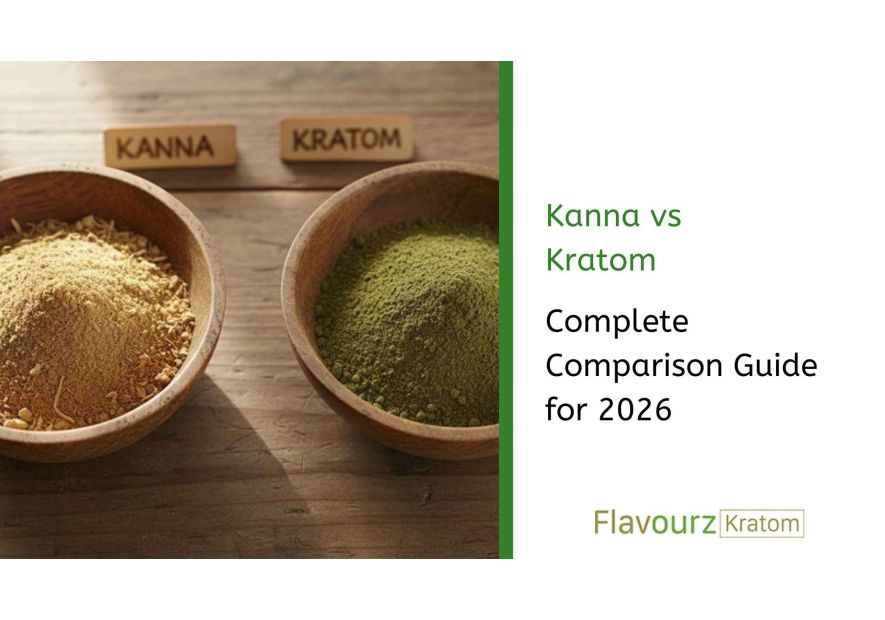
Kanna and kratom are two natural botanicals that people often compare for mood support and stress relief. However, they are very different plants with distinct origins, active compounds, and effects. Kanna comes from South Africa and works mainly with serotonin receptors. Kratom comes from Southeast Asia and interacts with different receptor systems in the body.
With over 5 years of hands-on kratom experience and working with Flavourz Kratom since 1999, I have helped thousands of customers understand how different botanicals work. For detailed strain-specific information, check out Flavourz's super indo kratom guide to understand Indonesian varieties better. In this guide, I will break down the key differences between kanna and kratom so you can make an informed choice for your wellness routine.
Quick Comparison: Kanna vs Kratom at a Glance
| Feature | Kanna | Kratom |
|---|---|---|
| Scientific Name | Sceletium tortuosum | Mitragyna speciosa |
| Origin | South Africa | Southeast Asia |
| Plant Type | Succulent | Tropical Tree |
| Main Alkaloids | Mesembrine, Mesembrenone, Mesembrenol | Mitragynine, other alkaloids |
| Primary Action | Interacts with serotonin receptors | Interacts with opioid receptors |
| Common Uses | Mood support, stress relief | Energy, relaxation, wellness support |
| Strain Variety | Limited variety | Many strains (Red, Green, White, Gold) |
| US Legal Status | Legal except Louisiana | Legal in most states (varies) |
What Is Kanna?
Kanna, scientifically known as Sceletium tortuosum, is a succulent plant native to South Africa. The indigenous San and Khoikhoi tribes have used this plant for centuries as a mood enhancer and stress reliever. Traditional uses included chewing the fermented plant material, brewing it as tea, or smoking it during social gatherings and spiritual ceremonies.
According to research published in the journal Molecules, kanna contains several active alkaloids that give it its unique properties. The main compounds include mesembrine, mesembrenone, and mesembrenol. These alkaloids work primarily by affecting serotonin levels in the brain.
How Kanna Works in the Body
Kanna's effects come from how its alkaloids interact with serotonin in the brain. Research shows that mesembrine acts as a serotonin reuptake inhibitor (SRI). This means it helps keep more serotonin available in the brain, which may support mood and emotional balance.
Additionally, kanna alkaloids act as PDE4 (phosphodiesterase-4) inhibitors. According to clinical studies cited by Drugs.com, this dual action may contribute to kanna's potential for supporting stress relief and cognitive function.
Users typically describe kanna's effects as gentle and calming. Many report feeling more relaxed and socially open without sedation. The effects usually begin within 15-30 minutes and are described as subtle rather than intense.
What Is Kratom?
Kratom, scientifically known as Mitragyna speciosa, is a tropical evergreen tree in the coffee family. It grows naturally in Southeast Asia, including Thailand, Indonesia, Malaysia, and Myanmar. Local communities have used kratom leaves for centuries, traditionally chewing them or brewing tea for energy during long work days.
Unlike kanna, kratom offers a wide variety of strains, each with different characteristics. Strains are typically categorized by vein color (red, green, white, or gold) and by region of origin (Bali, Maeng Da, Borneo, etc.). This variety is one reason kratom appeals to many wellness enthusiasts.
At Flavourz Kratom, we have served customers since 1999, making us one of the longest-running kratom brands in the USA. Over 25 years, we have helped over 10,000 customers find the right kratom strains for their individual needs.
How Kratom Works in the Body
Kratom contains over 40 different alkaloids, with mitragynine being the most abundant. These compounds interact with opioid receptors in the brain, which is fundamentally different from how kanna works with serotonin receptors.
What makes kratom unique is its dose-dependent effects. At lower amounts, kratom tends to produce more energizing and focusing effects. At higher doses, it may promote relaxation and calm. This versatility is why different kratom strains are associated with different experiences.
Key Differences Between Kanna and Kratom
While both plants are used for wellness support, kanna and kratom have significant differences that are important to understand.
Different Active Compounds
The chemical makeup of these plants is completely different. Kanna contains mesembrine-type alkaloids that primarily affect serotonin systems. Kratom contains indole alkaloids like mitragynine that interact with opioid receptors.
This fundamental difference in chemistry means the plants produce different types of experiences. Kanna users often describe mood enhancement and emotional openness. Kratom users report a wider range of effects depending on the strain and amount used.
Geographic Origins
Kanna is native to the dry, arid regions of South Africa. It is a succulent plant adapted to harsh desert conditions. The San and Khoikhoi tribes developed traditional preparation methods including fermentation to enhance its properties.
Kratom grows in the tropical rainforests of Southeast Asia where humidity and rainfall are high. The plant thrives in mineral-rich soil and can grow into large trees. Different growing regions produce kratom with slightly different alkaloid profiles, which is why region-specific strains exist.
Variety and Selection
One major difference is the variety available. Kanna products are relatively standardized, with most offering similar experiences. Some brands offer extracts at different strengths, but the overall variety is limited.
Kratom offers extensive variety through different strains. Red vein strains like Red Bali are associated with relaxation. White vein strains like White Maeng Da are known for energy and focus. Green strains offer balanced effects. This variety allows users to customize their experience.
Effects Comparison: Kanna vs Kratom
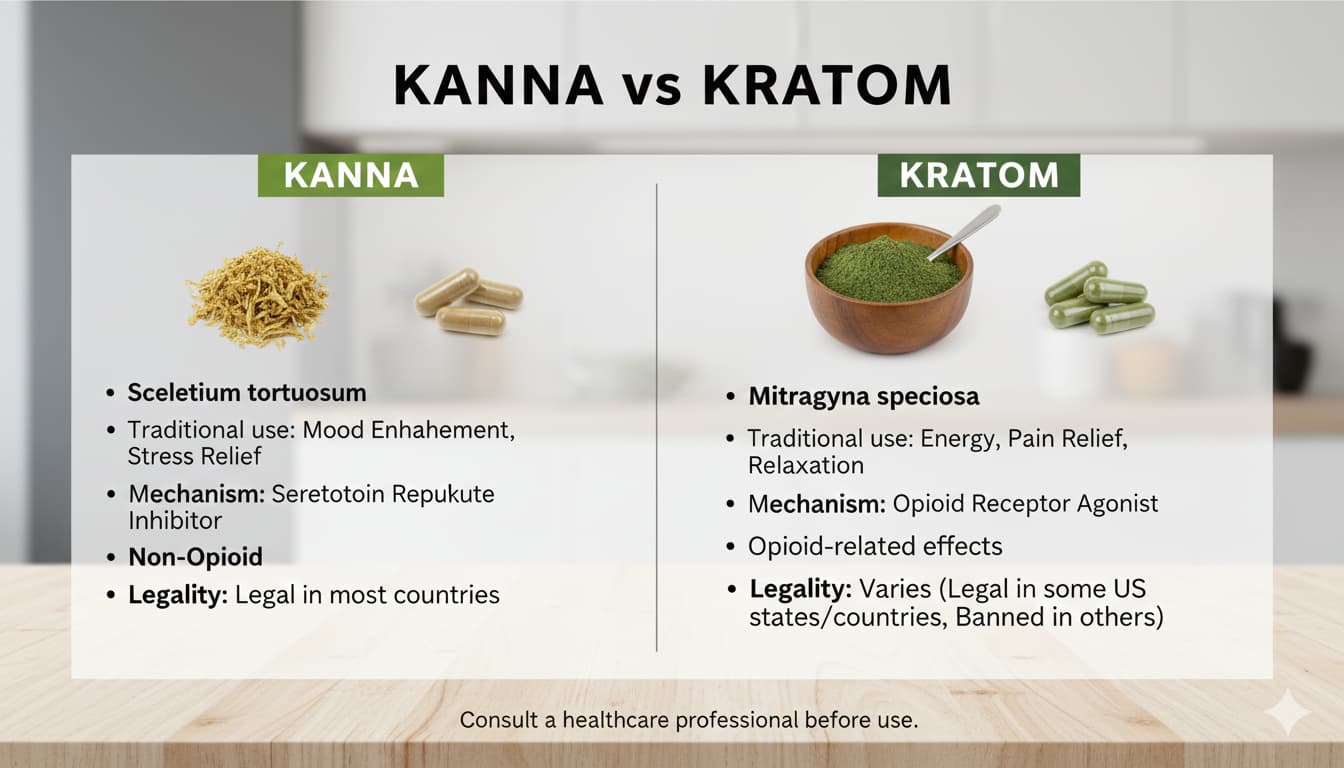
Understanding how each botanical may affect you is important for choosing the right option.
Kanna Effects
Based on traditional use and emerging research, kanna is primarily associated with mood supporting effects. Users commonly report feeling more relaxed and emotionally balanced. Some describe improved social comfort and mental clarity.
Clinical studies suggest kanna may help reduce feelings of anxiety and support cognitive function. Research published in Neuropsychopharmacology found that Zembrin, a standardized kanna extract, showed effects on the brain's amygdala, which is involved in emotional processing.
Kanna's effects are generally described as subtle and gentle. It does not produce strong stimulation or sedation in typical amounts. Many users appreciate that it supports calm focus without drowsiness.
Kratom Effects
Kratom's effects vary significantly based on the strain and amount used. This versatility is one of kratom's most appealing features for wellness enthusiasts.
At lower amounts, kratom is often described as energizing and focusing. Many users compare these effects to a strong cup of coffee without the jitters. White and green vein strains are typically chosen for daytime energy support.
At higher amounts, kratom tends to promote relaxation. Red vein strains are often selected for evening use when calm and comfort are the goals. Gold and fermented strains like Gold Bali offer balanced effects that many find ideal for unwinding.
Legal Status Comparison
Legal status is an important consideration when choosing between these botanicals.
Kanna Legal Status
Kanna is federally legal in the United States. It is not classified as a controlled substance and is generally sold as a dietary supplement. You can legally purchase, possess, and use kanna in 49 states.
The one exception is Louisiana. In 2005, Louisiana passed a law banning approximately 40 plants considered to have psychoactive properties, including Sceletium tortuosum. In Louisiana, kanna intended for human consumption is prohibited.
Internationally, kanna is legal in most countries including Canada and the United Kingdom. However, it is restricted in Australia and New Zealand. Always check local regulations before purchasing.
Kratom Legality
Kratom's legal status is more complex. It is not federally scheduled in the United States, meaning it is legal at the federal level. However, several states have enacted their own restrictions.
Kratom is currently banned in Alabama, Arkansas, Indiana, Rhode Island, Vermont, and Wisconsin. Some cities and counties in otherwise legal states also have local bans, including San Diego, California and Denver, Colorado.
Many states have passed the Kratom Consumer Protection Act (KCPA), which regulates kratom sales while keeping it legal. These laws typically require age verification, proper labeling, and quality testing. For detailed information, check our kratom legality by state guide.
Safety Considerations
Both botanicals have been used traditionally for centuries, but modern users should understand important safety information.
Kanna Safety
Kanna is generally considered well-tolerated when used responsibly. Side effects are typically mild and may include headache, loss of appetite, or slight dizziness in some users.
However, because kanna affects serotonin levels, it should not be combined with SSRI antidepressants, MAOI medications, or other serotonergic substances. This combination could potentially lead to serotonin syndrome, a serious condition. Always consult a healthcare professional before using kanna if you take prescription medications.
Kratom Safety
Kratom has a long history of traditional use in Southeast Asia. When sourced from reputable vendors who follow Good Manufacturing Practices, kratom can be part of a responsible wellness routine.
Quality matters significantly with kratom. The American Kratom Association has established GMP standards specifically for the kratom industry to ensure consumer safety. Look for vendors who provide third-party lab testing and follow these quality guidelines.
Potential side effects at higher doses may include nausea or constipation. Starting with smaller amounts and adjusting gradually helps most users find their ideal experience. Our kratom dosage guide provides detailed recommendations.
Which Is Right for You?
Choosing between kanna and kratom depends on your individual goals and preferences.
Consider Kanna If:
You are primarily interested in gentle mood support and emotional balance. Kanna works through serotonin pathways and offers subtle, calming effects without significant stimulation or sedation. It may be particularly suited for social situations or when you want to feel more relaxed and open.
Kanna might also appeal to those who prefer a botanical with simpler legal status across most of the US. With restrictions only in Louisiana, kanna is widely accessible.
Consider Kratom If:
You want more variety and the ability to customize your experience. Kratom's many strains offer different effects ranging from energizing to relaxing. This versatility makes kratom appealing for those with varying wellness goals.
Kratom may also appeal to those who appreciate a botanical with a longer established market presence, and browsing kratom for sale from certified vendors gives access to more developed quality standards than most botanical markets offer. The American Kratom Association's GMP program provides additional assurance when purchasing from certified vendors.
Can You Use Kanna and Kratom Together?
Some users wonder about combining kanna and kratom. While both are natural botanicals, they work through different pathways in the body. Combining substances that affect different receptor systems can produce unpredictable results.
Most experts recommend choosing one botanical and using it on its own rather than mixing. This approach allows you to understand how each affects you individually. If you do consider combining them, starting with very small amounts and consulting a healthcare professional is essential.
Kanna vs Kratom vs Kava
Another botanical that often comes up in these discussions is kava. Kava (Piper methysticum) is a plant from the Pacific Islands that works through GABA receptors. It is different from both kanna and kratom in its mechanism and effects.
While a full comparison of all three is beyond this article's scope, understanding that each botanical works through different pathways helps explain why they produce different experiences. For more information on how kratom compares to kava, see our kratom vs kava comparison.
Quality Matters for Both Botanicals
Regardless of which botanical you choose, quality is essential. Both kanna and kratom can vary significantly in purity and potency depending on the source.
For kratom, look for vendors who provide Certificates of Analysis from third-party laboratories. These documents verify alkaloid content and screen for contaminants like heavy metals, pesticides, and pathogens. AKA GMP certification is another indicator of quality commitment.
For kanna, look for standardized extracts from reputable suppliers. Zembrin is one example of a clinically studied, standardized kanna extract that has been used in research trials.
At Flavourz Kratom, we have prioritized quality for over 25 years. Our experience serving over 10,000 customers has taught us that consistent quality is the foundation of customer satisfaction.
Final Thoughts on Kanna vs Kratom
Kanna and kratom are both fascinating botanicals with long histories of traditional use. However, they are fundamentally different plants that work through distinct mechanisms.
Kanna from South Africa offers gentle mood support through its interaction with serotonin receptors. Its effects are subtle, calming, and generally well-suited for emotional balance and social comfort.
Kratom from Southeast Asia provides more variety through its many strains and dose-dependent effects. Whether you seek energy, relaxation, or something in between, different kratom strains can be selected to match your goals.
The best choice depends on your individual needs, preferences, and what you hope to achieve. Both botanicals offer unique benefits when sourced from quality suppliers and used responsibly.
Frequently Asked Questions
Is kanna the same as kratom?
No, kanna and kratom are completely different plants. Kanna (Sceletium tortuosum) is a succulent from South Africa that works with serotonin receptors. Kratom (Mitragyna speciosa) is a tree from Southeast Asia that interacts with opioid receptors. They have different active compounds and produce different effects.
Which is stronger, kanna or kratom?
This comparison is difficult because they work differently. Kanna is generally described as producing subtle, gentle effects. Kratom can produce more noticeable effects, especially at higher amounts. However, strength is subjective and depends on individual response and the specific products used.
Is kanna legal everywhere in the US?
Kanna is legal in 49 US states. The only exception is Louisiana, which banned kanna for human consumption in 2005 as part of a broader law on psychoactive plants.
Does kratom work like kanna for mood?
Both botanicals may support mood, but they work through different mechanisms. Kanna primarily affects serotonin, which is directly involved in mood regulation. Kratom works through opioid receptors, producing effects that can include mood enhancement but through a different pathway.
Disclaimer: The statements in this article have not been evaluated by the Food and Drug Administration. These products are not intended to diagnose, treat, cure, or prevent any disease. Always consult with a healthcare professional before starting any new supplement regimen.
Last updated: January 2026

Leave a comment