

Kratom Strain Color Variations: Red, Green & White Veins
Last Updated: April 2026
Kratom comes in red, green, and white vein colors based on the leaf's age at harvest and how it's dried after picking. Red veins come from mature leaves and lean relaxing. White veins come from young leaves and lean energizing. Green veins fall in the middle. Yellow and gold colors aren't natural at all, they're created through specialized post-harvest processing.
I've been working with all four color categories at Flavourz Kratom for over 5 years now, and our brand has been sourcing kratom since 1999. Honestly, the color question is the single most asked thing we get from new customers. Let me break down what these colors actually mean, what science supports the claims, and which one might fit what you're looking for.
What Do the Different Kratom Vein Colors Mean?
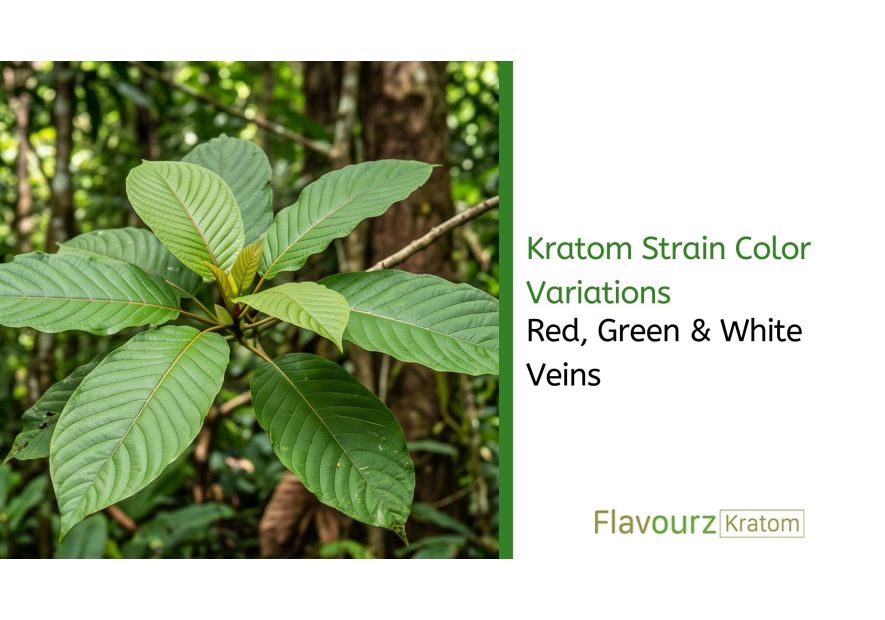
Kratom vein colors refer to the central vein color of the Mitragyna speciosa leaf at harvest, which corresponds to the leaf's maturity. White veins indicate young leaves, green veins indicate mid-maturity, and red veins indicate fully mature leaves. After harvest, drying methods further shape the alkaloid profile and final powder color, creating the distinct effect categories we see on the market.
Here's the part most articles skip: the vein color you see in the leaf isn't the same as the powder color you buy.
Once dried and ground, all kratom powder looks roughly green. The "red," "green," "white," and "yellow" labels refer to the categorization based on harvest timing plus drying technique, not what the finished product looks like. This is something we explain to customers all the time, and it surprises most of them.
How Vein Colors Actually Form
The kratom tree's leaf veins shift color naturally as the leaf ages. Young leaves show whitish veins. As they mature, the veins turn green. Fully mature leaves develop reddish-brown veins. Farmers harvest at specific stages depending on which color category they're producing.
But here's where it gets interesting. According to a 2024 study published on NCBI examining kratom alkaloid biosynthesis, post-harvest treatments dramatically influence the final alkaloid composition. The research found that withering increased mitragynine concentrations by 14-65% in some cultivars, while different drying temperatures preserved or altered specific alkaloids. So the color category is partly about leaf age and partly about what happens after the leaf is picked.
Why Do Kratom Leaves Have Different Vein Colors?
Kratom leaves develop different vein colors as they age through the growth cycle. The chemical composition of the leaf changes alongside this color shift, with mitragynine and other alkaloids shifting in concentration as the leaf matures. Drying methods after harvest then further modify the alkaloid balance, creating the distinct color categories used in commercial kratom products.
The Science Behind the Color Shift
Kratom contains over 40 alkaloids, but two get most of the attention: mitragynine and a secondary metabolite called 7-hydroxymitragynine. According to the research published on Wikipedia citing peer-reviewed sources, mitragynine can make up to 66% of total alkaloids in Thai varieties, while the secondary metabolite typically stays at 2% or lower in fresh leaves. As the leaf matures and dries, the ratio between these compounds shifts.
I'll be honest about something most vendors won't say: research on whether vein color genuinely changes alkaloid content is mixed. Some studies show clear differences. Others suggest geographic origin and drying technique matter more than the leaf's literal vein color. What I can tell you from 5+ years of carrying all colors and getting feedback from thousands of customers is that the effect categories are real, even if the science is still catching up to the practical experience.
Quick Reference Table: Kratom Vein Colors Compared
| Color | Leaf Age | Common Use | Best For |
|---|---|---|---|
| White | Young | Energy, focus | Morning use |
| Green | Mid-maturity | Balanced effects | Daytime, beginners |
| Red | Fully mature | Relaxation, calm | Evening use |
| Yellow/Gold | Processed | Mood, blend effects | Variety seekers |
What Is Red Vein Kratom?
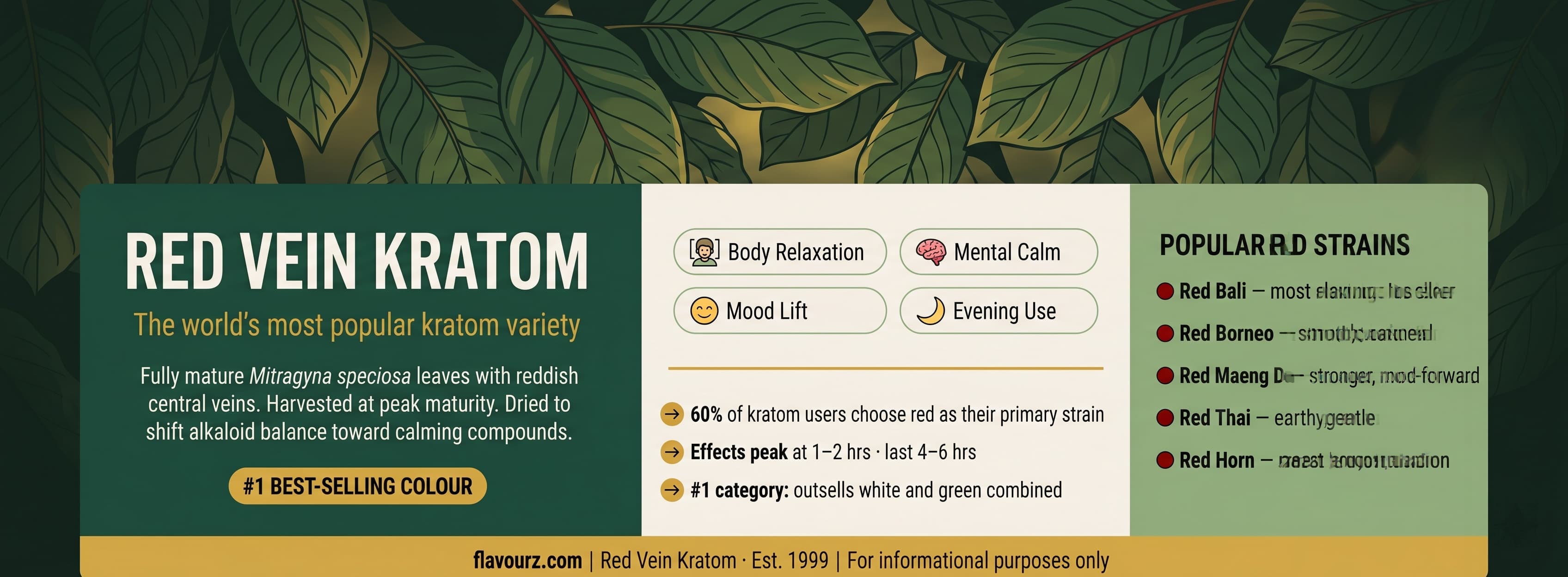
Red vein kratom comes from fully mature Mitragyna speciosa leaves with reddish-brown central veins. It's the most popular color category in the US market, known for relaxing and grounding effects. Red kratom typically goes through additional fermentation or sun-drying that shifts its alkaloid balance toward calming compounds. Most users prefer red varieties for evening or end-of-day use.
Red is far and away our best-selling color at Flavourz.
Why Red Vein Dominates the Market
About 6 out of 10 customers I've worked with end up with red as their primary daily strain. There's a reason for that. The mature leaves used in red production have had time to develop a more balanced alkaloid profile, with research suggesting closer ratios between mitragynine and its secondary metabolite. This shift typically produces effects users describe as soothing, calming, and grounding.
Popular red strains include Red Bali, Red Borneo, Red Maeng Da, and Red Thai. Each has its own personality despite sharing the red category. Red Bali is our top seller, and frankly, has been for years. Customers come back for it because it just works for what most people want from kratom: a relaxed, mellow feeling without heavy sedation.
For a deeper look at the variations within this category, our red kratom strains guide covers the differences between the major red varieties. You can also browse all our red vein options if you want to compare them directly.
What Is White Vein Kratom?
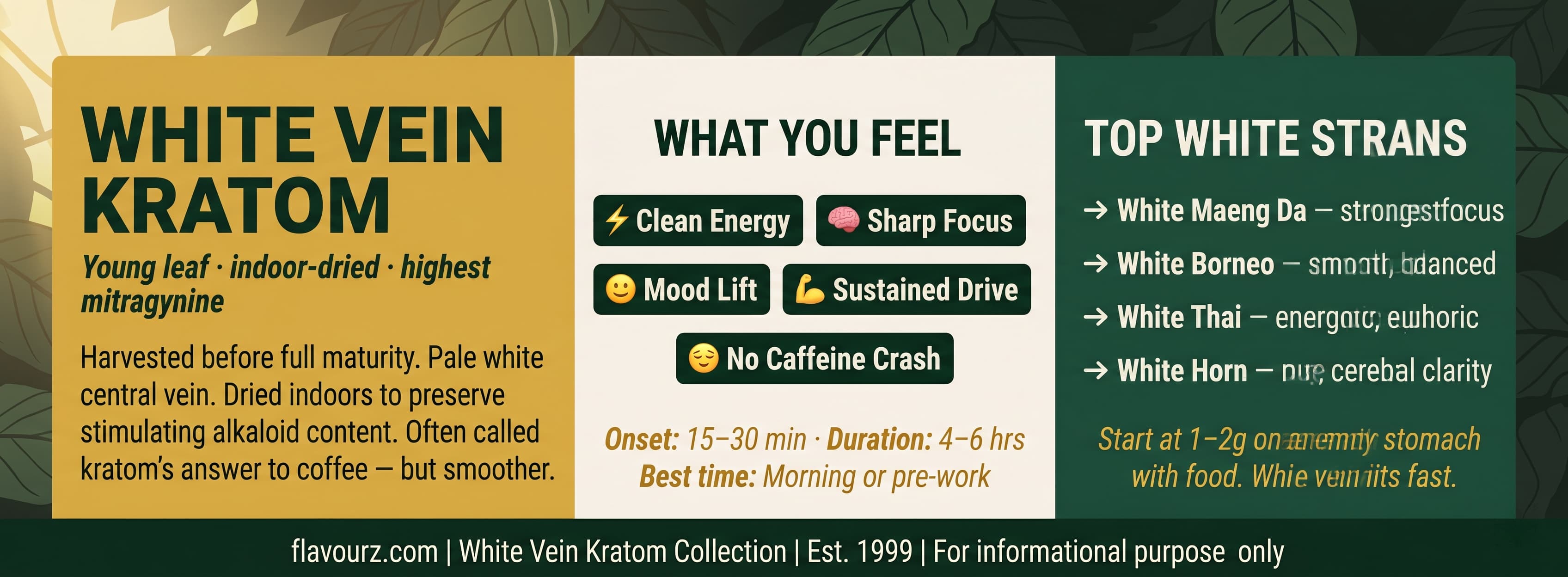
White vein kratom comes from young Mitragyna speciosa leaves with pale, whitish central veins, harvested before the leaf reaches full maturity. White kratom typically gets dried indoors away from sunlight to preserve its higher mitragynine concentration. Users describe white vein effects as energizing, focus-enhancing, and motivating, making it popular for morning and pre-workout use.
If you've heard people compare kratom to coffee, they're probably talking about white vein.
The White Vein Profile
White is the second-most-popular category we sell, but it has a more specific user base. Athletes, students, shift workers, and people looking to cut back on coffee tend to gravitate here. The energy from white vein hits differently than caffeine. It's smoother, longer, and doesn't crash the same way.
Common white strains include White Maeng Da, White Borneo, White Thai, and White Hulu Kapuas. Within these, you'll find variation. Some lean more energetic. Others feel more cerebral and focused. Our White Maeng Da is a customer favorite for sustained focus during long workdays.
One thing I always warn customers about: white vein on an empty stomach can be too intense for sensitive users. About 3 in 10 first-time white vein customers tell me it felt too stimulating until they tried it with food. Your mileage may vary, but starting with a smaller dose is the smart play. Browse our full white vein collection if energy and focus are what you're after.
What Is Green Vein Kratom?
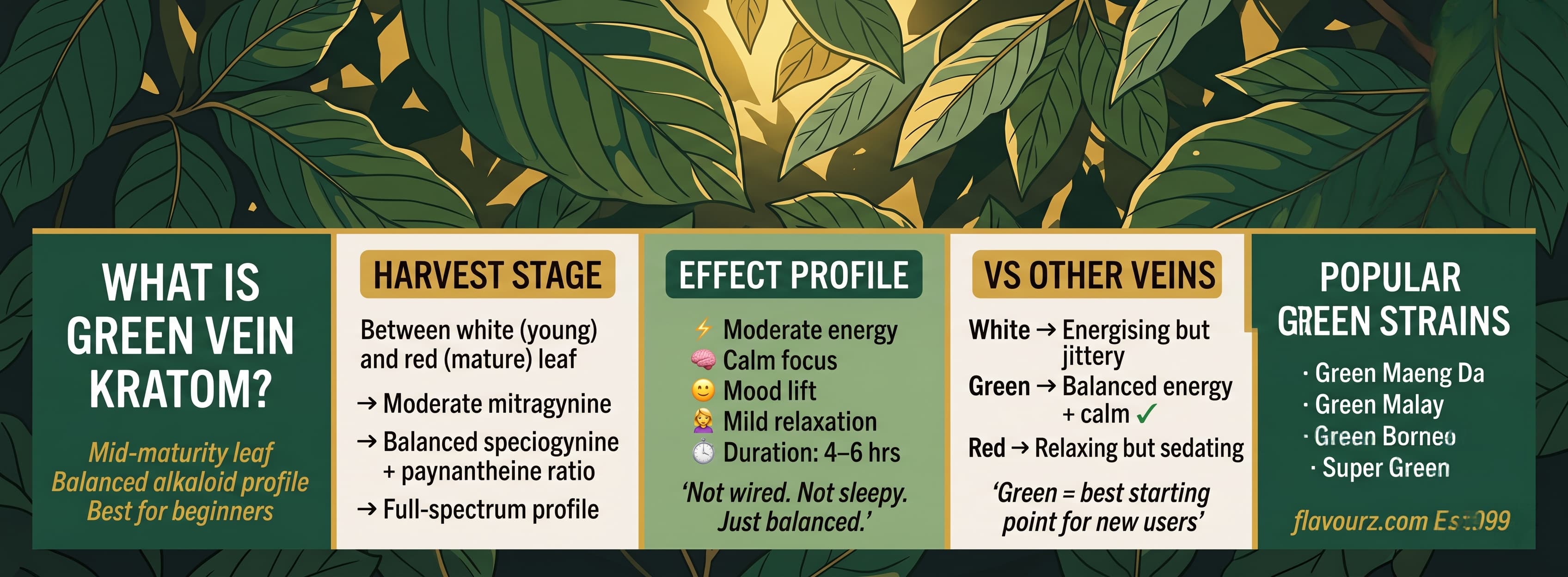
Green vein kratom comes from mid-maturity Mitragyna speciosa leaves harvested between the white and red stages. Green vein offers a balanced alkaloid profile that combines moderate energy with mild relaxation, sitting in the middle of the effects spectrum. It's frequently recommended for beginners and daily users who want versatile, all-day effects without the extremes of white or red.
Green is what I tell almost every first-time customer to try first.
Why Green Is the Beginner's Best Friend
Here's something I've noticed over years of customer service calls: people who start with green tend to stick with kratom long-term more often than people who start with red or white. The middle-ground effects give your body a chance to learn what kratom actually feels like before you go chasing specific effect profiles. It's just an easier introduction.
Green vein effects often include moderate energy, improved mood, and a mild calm focus. It's the strain you can take in the morning without feeling wired or in the afternoon without feeling sleepy. Popular options include Green Maeng Da, Green Malay, Green Borneo, and Super Green.
For new users, I usually point them to our beginner's guide first, then suggest starting with a green strain. The full green vein selection covers most use cases people are looking for when they first try kratom.
What About Yellow and Gold Kratom Colors?
Yellow and gold kratom aren't natural vein colors. They're created through specialized post-harvest processing, typically extended drying or fermentation applied to white or red leaves. This process shifts the alkaloid profile to create unique effects that fall between the standard color categories. Yellow and gold strains are rarer than the three main colors but have a dedicated following.
I get questions about yellow and gold kratom almost daily.
How Yellow/Gold Strains Are Made
The fermentation process for yellow kratom usually starts with green or white vein leaves. The leaves get exposed to controlled sunlight and humidity for an extended period, which breaks down some chlorophyll and alters the alkaloid profile. The result is a powder that often takes on a yellowish or golden hue and produces effects that don't fit neatly into the red/green/white categories.
Some users describe yellow vein effects as mood-lifting, gently energizing, and longer-lasting than green. Gold strains tend toward warmer, more relaxing effects similar to mild reds. Our Yellow Vietnam is a great example of how processing creates a genuinely different experience from any standard color. Check out the full yellow vein collection if you want to explore this category.
Which Kratom Color Is the Strongest?
No single kratom color is objectively "strongest" since strength depends on alkaloid concentration, not vein color alone. Red vein kratom often feels more potent for relaxation, while white vein typically feels stronger for energy. Within each color category, specific strains like Maeng Da varieties tend to test higher in alkaloid content than standard strains, regardless of color.
This is one of those questions where the answer depends entirely on what you mean by "strongest."
What Actually Determines Strength
Strength in kratom comes from total alkaloid content, primarily mitragynine percentage. Maeng Da strains across all colors tend to test higher in alkaloids because they're typically harvested from premium tree varieties. A White Maeng Da and a Red Maeng Da can both be "strong" but produce very different experiences.
According to the American Kratom Association, the strongest predictor of consistent effects isn't color at all. It's whether the vendor follows GMP standards, tests every batch, and discloses alkaloid content. A poorly-grown red can feel weaker than a premium white. We've tested this internally over the years and it holds up.
If you want maximum potency in any color, look for Maeng Da varieties. Our Maeng Da collection covers all four color categories with strains that consistently test high for alkaloid content.
How Do You Choose the Right Kratom Color?
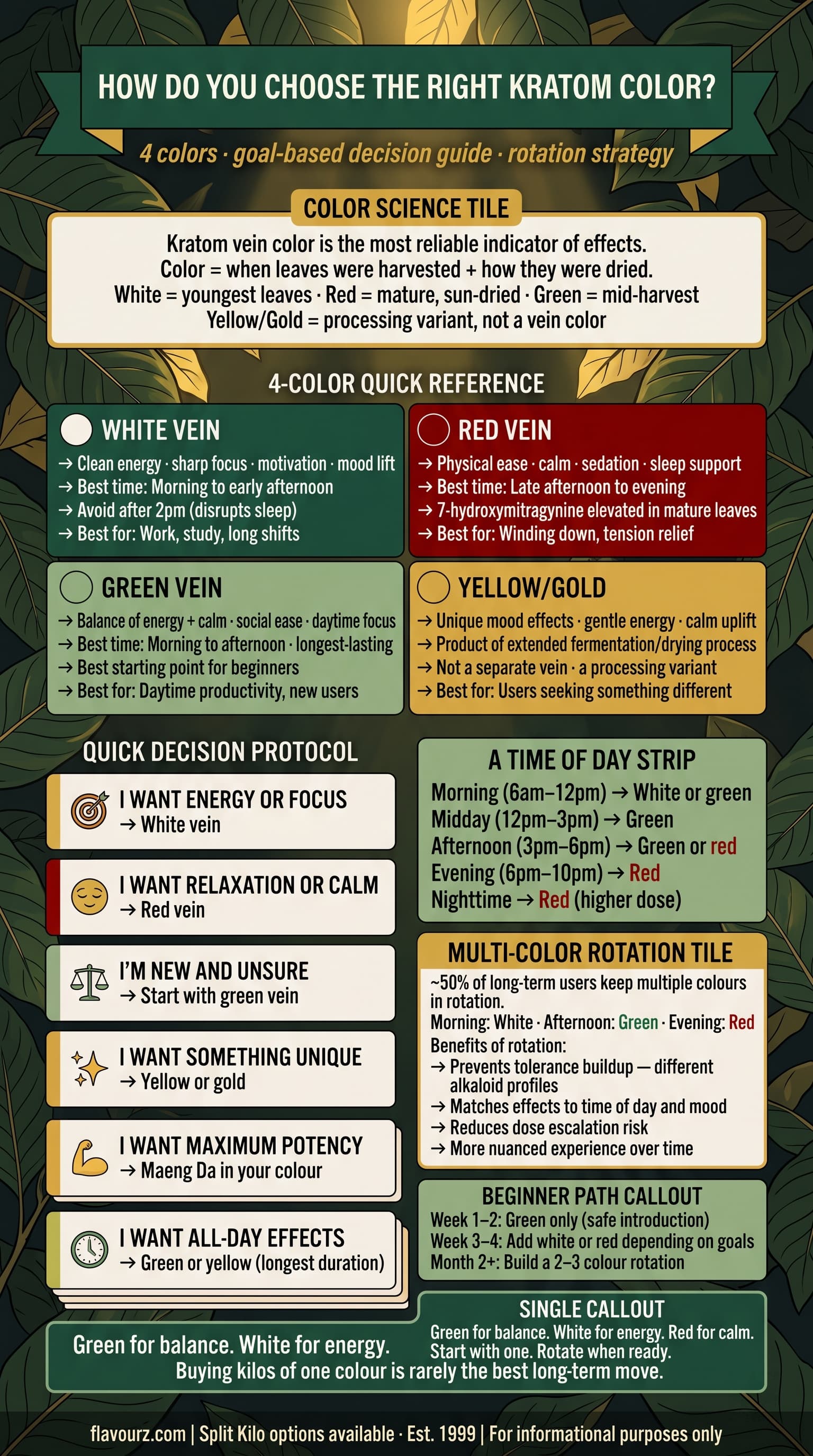
Choosing the right kratom color depends on your goals, time of day, and experience level. Beginners typically do best starting with green vein for balanced effects. Choose white for morning energy, green for daytime balance, red for evening relaxation, and yellow/gold for unique mood effects. Many experienced users keep multiple colors on hand for different situations.
A Simple Decision Framework
Here's how I help customers pick when they call:
- You want energy or focus: Try a white vein strain
- You want relaxation or calm: Try a red vein strain
- You're new and unsure: Start with a green vein strain
- You want something unique: Try a yellow or gold strain
- You want maximum potency: Look for Maeng Da in your color
- You want all-day effects: Green or yellow tend to last longest
The Multi-Color Approach
About half of our long-term customers keep multiple colors in rotation. They might use white in the morning, green in the afternoon, and red in the evening. This rotation also helps prevent tolerance buildup, which is something the kratom community has known about for years. Switching alkaloid profiles regularly keeps your body from settling into a tolerance pattern with any single strain.
If you're committed to kratom long-term, building a collection across multiple colors is smarter than buying kilos of one strain. Split kilo options are a good way to do this without committing to a full kilo of each color.
Do Kratom Vein Colors Really Matter?
Yes, kratom vein colors matter as a useful categorization system, even though the underlying science is still developing. Effect categories tied to vein colors are consistent enough across users and vendors that they help people choose products with reasonable expectations. Color isn't the only factor (geographic origin, processing, and strain genetics also play big roles), but it's a reliable starting reference point.
What 25 Years of Selling Has Taught Us
The color system isn't perfect. I'll be the first to admit that two reds from different sources can feel quite different. Two greens can feel different. Geographic origin, soil quality, harvest timing, and drying technique all influence the final product as much or more than the color category alone.
But here's the thing. After 25 years and over 10,000 customers served, the color system holds up as a useful shortcut. When a customer says "I want something to help me wind down at night," I can confidently point them toward a quality red. When they say "I need help focusing during a long study session," white vein is a reasonable starting point. The system works well enough for practical purposes, which is why the entire industry uses it.
What to Watch Out For When Buying by Color
Color claims aren't standardized across the kratom industry. Some less-reputable vendors will sell mislabeled product or use inconsistent processing methods. Here's what to look for:
- Third-party lab tests: Verify alkaloid content for every batch
- AKA-certified vendors: Following American Kratom Association GMP standards
- Transparent sourcing: Knows which region the leaf came from
- Consistent reviews: Multiple users describing similar effects
- Clear color descriptions: Vendor explains what their "red" or "white" means
- Reasonable pricing: Not suspiciously cheap, not gouging on premium
If a vendor can't tell you specifics about their sourcing or processing, that's a red flag. Quality matters more than the color label on the bag.
Frequently Asked Questions
Can the same kratom tree produce different vein colors?
Yes, the same Mitragyna speciosa tree produces all three vein colors at different stages of leaf maturity. Farmers harvest at different times to produce different colors from the same trees. Drying methods after harvest then further differentiate the final product.
Are red, green, and white kratom from different plants?
No, all kratom comes from the same Mitragyna speciosa species. The colors come from differences in leaf maturity at harvest combined with post-harvest processing methods, not different plant varieties. Genetic strain differences (like Maeng Da vs Bali) are separate from vein color.
Why does dried kratom powder all look green?
Once dried and ground, kratom powder typically appears green regardless of the original vein color. The "color" labels refer to the categorization system based on harvest timing and processing, not the visual appearance of the finished powder. Some yellow or gold strains may show slightly different hues due to fermentation.
Which kratom color lasts longest?
Green and yellow vein strains generally produce the longest-lasting effects, often 4-6 hours after onset. Red vein effects typically last 4-5 hours. White vein effects tend to be shorter, around 3-4 hours, due to faster metabolism of the dominant alkaloids in young leaves.
Can I mix kratom colors in one dose?
Yes, many experienced users blend colors to customize effects. A common blend is mixing white with red for sustained energy without overstimulation. Beginners should learn how each color affects them individually before blending, since combined effects can be unpredictable.
Does the color affect how long kratom stays good?
No, all kratom colors have similar shelf life when stored properly. Quality kratom maintains potency for 12-18 months in airtight containers kept cool, dark, and dry. Yellow and gold strains may last slightly longer due to the additional processing they undergo.
The Bottom Line on Kratom Colors
Kratom color categories are a practical, time-tested system for choosing the right strain for what you want. Red for relaxation, white for energy, green for balance, yellow and gold for variety. The system isn't perfect, and other factors matter too, but it's a solid starting framework that works for most people.
If you're new to kratom, start with a quality green vein strain from a reputable vendor. Spend a few weeks learning how it feels, then branch out to white or red based on what you're looking for. Don't get caught up in chasing the "strongest" color since strength depends more on quality and strain genetics than on color category.
Browse our complete kratom selection when you're ready to find your match. We've spent 25 years curating products that actually deliver what their color category promises, and every batch goes through third-party testing before it hits the shelves.
Disclaimer: This article is for informational purposes only and does not constitute medical advice. Kratom has not been evaluated by the FDA for safety or effectiveness. It is not intended to diagnose, treat, cure, or prevent any disease. Consult your healthcare provider before using kratom, especially if you have medical conditions or take medications. Kratom is not for use by anyone under 21, pregnant, or breastfeeding. Check your local laws before purchasing.

Leave a comment