
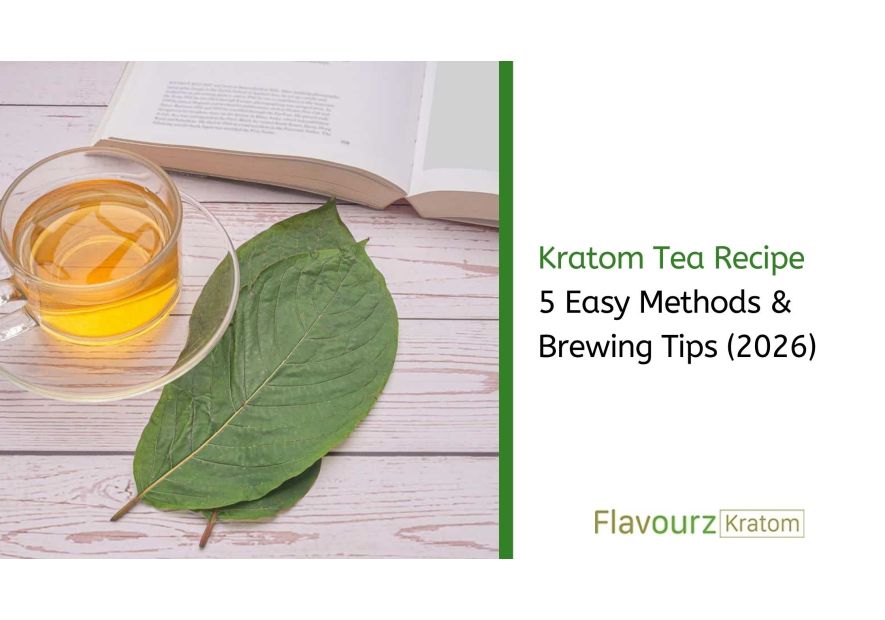
Kratom Tea Recipe: 5 Easy Methods & Brewing Tips (2026)
Last Updated: April 2026
Kratom tea is one of the oldest ways to use this plant, and honestly, one of the best. The traditional communities of Southeast Asia have been brewing Mitragyna speciosa leaves into tea for centuries, long before powder or capsules existed. After 25 years at Flavourz Kratom, I've brewed kratom tea more times than I can count, and I've watched thousands of customers find their preferred method through trial and error.
This guide gives you five proven brewing methods, step-by-step instructions for each, and the practical tips that actually make a difference in taste and potency. Whether you're using kratom powder or crushed leaf Maeng Da, there's a method here that fits your setup and preference.
What Is the Best Way to Make Kratom Tea?
The best way to make kratom tea is to gently simmer kratom powder or crushed leaf in water with fresh lemon juice for 15–20 minutes, then strain before drinking. This method balances potency, flavor, and ease. The lemon juice stabilizes alkaloids during heating and improves extraction, making it the most reliable and widely recommended method.
Temperature matters more than most people realize. A 2020 study published in the Journal of Ethnopharmacology found that kratom's primary alkaloids, especially mitragynine, are sensitive to prolonged high heat. Keeping your water below a rolling boil, around 185–195°F, protects the active compounds while still extracting them effectively.
The five methods below cover everything from a quick stovetop brew to an overnight cold steep. Each one works — they just deliver a slightly different experience.
Kratom Tea Brewing Methods: Quick Reference
aption>5 Kratom Tea Brewing Methods Compared (2026)
| Method | Temp | Time | Best For |
|---|---|---|---|
| Stovetop Simmer | 185–195°F | 15–20 min | Best overall potency |
| Tea Bag / Steep | 190–200°F | 10–15 min | Easiest, cleanest cup |
| French Press | 195–200°F | 10–12 min | Controlled, balanced |
| Cold Brew | Room temp / cold | 8–12 hrs | Lowest bitterness |
| Capsule Tea | 185–195°F | 5–8 min | Quickest, travel-friendly |
Method 1: Stovetop Simmer (The Classic)
The stovetop simmer is the gold standard for kratom tea. It extracts the most alkaloids of any hot method and gives you full control over strength. Most experienced kratom tea drinkers use this one. I do too. It takes about 20 minutes start to finish and produces a strong, consistent cup every time.
What you need: Kratom powder or crushed leaf, water, fresh lemon juice, fine mesh strainer or cheesecloth, honey or ginger (optional).
- >Measure 2–4 grams of kratom powder or 4–6 grams of crushed leaf into a small pot >Add 2 cups of water and squeeze in half a fresh lemon >Heat on medium until the water reaches a light simmer, around 185–195°F (not a rolling boil) >Reduce heat to low and simmer for 15–20 minutes, stirring occasionally >Watch for the water to shift to a deep amber or orange-brown color — that's your cue it's ready >Remove from heat and strain through a fine mesh strainer or cheesecloth into a mug >Add honey, ginger, or cinnamon to taste and drink slowly
The lemon juice does two things here. It helps pull the alkaloids out of the plant material more fully, and it stabilizes them during heating so less degrades before you drink it. Don't skip it. This is the single most impactful tip I give new tea brewers.
Pro tip: Don't throw away the leftover kratom solids after straining. You can re-steep them once in fresh hot water with another squeeze of lemon for a lighter second cup. Maybe 30–40% of the alkaloids remain after the first brew.
Method 2: Tea Bag / Steep Method (Easiest)
This is the method I'd recommend to someone who wants a clean, hassle-free cup without standing over a pot. Reusable muslin tea bags or fine mesh infuser balls work perfectly for crushed leaf. For powder, you'll want a finer filter, like a paper tea filter, to avoid sediment in your cup.
- >Measure your kratom dose into a reusable tea bag, muslin cloth, or paper tea filter and seal it >Bring 2 cups of water to a boil, then let it cool for 1–2 minutes to around 190–200°F >Add a squeeze of lemon juice directly to the hot water in your mug >Place the tea bag in the mug and pour the hot water over it >Steep for 10–15 minutes (longer = stronger, but also more bitter) >Remove the bag, add sweetener if desired, and drink
The downside of this method compared to the stovetop simmer is extraction efficiency. Because you're steeping rather than simmering, you'll get slightly less out of the same dose. Some people compensate by using a gram more than their usual dose. Crushed leaf works better here than powder since it allows water to circulate through the bag more freely.
Method 3: French Press (Best for Powder)
A French press is genuinely one of the cleanest ways to brew kratom tea with powder. The built-in plunger filter separates the plant material from the liquid without you needing a separate strainer. It's what I use when I want a smooth cup with minimal mess and good control over steep time.
- >Add 3–4 grams of kratom powder directly into the French press carafe >Heat 2 cups of water to around 195–200°F (just below boiling) >Add a squeeze of lemon juice to the water before pouring >Pour the hot water into the French press over the kratom >Stir gently to make sure the powder is fully mixed in >Place the lid on but don't press the plunger yet >Steep for 10–12 minutes >Slowly press the plunger all the way down >Pour into a mug and add honey or oat milk if desired
One thing to know: fine powder can sometimes slip past the French press filter and leave a small amount of sediment at the bottom of your cup. That's normal. Just avoid drinking the last half-inch of liquid if the sediment bothers you. This method works especially well with our kratom powder since the grind consistency is uniform, which helps the filter do its job cleanly.
Method 4: Cold Brew (Smoothest, Lowest Bitterness)
Cold brew kratom tea has become more popular over the past few years, and honestly, I get why. It's the smoothest, least bitter version of kratom tea you can make. The trade-off is time — you need to plan 8–12 hours ahead. But the result is a mellow, refreshing drink that's nothing like the earthy intensity of a stovetop brew.
- >Measure 3–5 grams of kratom powder or 5–7 grams of crushed leaf into a mason jar or pitcher >Add 2–3 cups of cold water and a squeeze of lemon juice >Stir well to combine, then seal the jar or cover the pitcher >Place in the refrigerator and let steep for 8–12 hours (overnight works perfectly) >In the morning, strain through a fine mesh strainer or cheesecloth into a glass >Add ice, honey, or mint to taste and enjoy cold
Cold water extracts alkaloids more slowly and incompletely than hot water, so the effect profile is generally milder than a stovetop brew. About 6 out of 10 customers I've spoken with who switch to cold brew specifically mention they prefer it in summer, or when they want a lighter daytime experience without the intensity of a hot brew. It's also a great option for people who find the bitterness of hot kratom tea hard to get past.
Method 5: Capsule Tea (Quickest)
This one surprises people, but it works. If you have kratom capsules on hand and want tea without loose powder, you can dissolve the capsules directly in hot water. The gelatin or vegetable cellulose shell dissolves in hot water within 2–3 minutes, releasing the powder inside.
- >Heat 1.5 cups of water to around 185–195°F (not a full boil) >Drop your measured capsule dose directly into the hot water >Stir gently every 30 seconds until the capsule shells fully dissolve, about 2–3 minutes >Add lemon juice, honey, or your preferred flavoring >Strain if needed to remove any remaining capsule shell pieces >Drink while warm
This method is handy for travel or when you don't have loose powder available. The onset is slightly faster than swallowing capsules whole because the powder is already suspended in liquid. It's not as refined as the stovetop method, but for a quick cup it gets the job done without any extra equipment.
Does Lemon Juice Make Kratom Tea Stronger?
Yes, lemon juice measurably improves kratom tea potency. The citric acid helps break down plant matter and improves alkaloid extraction from the leaf material. It also stabilizes mitragynine during heating, reducing the amount that degrades before you drink it. Most experienced kratom tea brewers add lemon juice as a standard step, not an optional one.
Other natural potentiators that work well in kratom tea include:
- >
Grapefruit juice:
- Contains compounds that slow the breakdown of mitragynine in the body, which can extend the duration of effects >
Turmeric:
- Pairs well with kratom tea and may enhance absorption; our
kratom and turmeric stack guide
- covers this in detail >
Apple cider vinegar:
- A small splash works similarly to lemon juice for extraction improvement >
Black pepper:
- Contains piperine, which can enhance absorption of plant alkaloids
According to the American Kratom Association's Good Manufacturing Practices guidelines, potency consistency in kratom products depends heavily on proper handling and preparation. Acidic pre-treatment of kratom before brewing aligns with what the broader herbal community has known for years about improving alkaloid bioavailability from plant sources.
How to Reduce the Bitterness of Kratom Tea
Kratom tea's bitterness comes from the tannins and alkaloids in the leaf. You can't eliminate it entirely, but you can dial it down significantly with a few straightforward adjustments that don't affect potency.
- >
Honey:
- The most effective bitterness masker. Add 1–2 teaspoons while the tea is still warm so it dissolves fully >
Ginger:
- Fresh ginger slices simmered alongside kratom add warmth that balances the bitterness and can also help settle the stomach >
Cinnamon:
- A half teaspoon stirred in adds sweetness without sugar and complements kratom's earthy base notes >
Oat milk or coconut milk:
- Adds creaminess that softens the sharp edge of the alkaloid bitterness >
Cold brewing:
- Lowers bitterness more than any additive by changing the extraction chemistry entirely >
Shorter steep time:
- The longer you steep, the more tannins extract and the more bitter it gets. Pull at 10 minutes if bitterness is a concern
Kratom Tea Dosage: How Much to Use
For tea, use 2–4 grams of powder or 4–6 grams of crushed leaf per cup as a starting point. Tea is slightly less bioavailable than toss-and-wash powder because not all alkaloids fully extract into the water, so first-time tea drinkers often need a slightly higher dose than their usual powder amount to achieve the same effect.
A good rule of thumb is to add 1 gram to your normal powder dose when converting to tea. So if you normally take 3 grams of powder, start with 4 grams when brewing. Give it 45–75 minutes before deciding whether to adjust, since tea onset is slower than swallowing powder directly.
Our full kratom dosage guide covers strain-specific adjustments in more detail, which is worth reading if you're new to calibrating doses. And if you want a broader overview of how to get started with kratom in general, our how to use kratom powder guide walks through the full picture.
Frequently Asked Questions
 Frequently Asked Questions.jpg)
Can you boil kratom tea?
Boiling is not recommended. A rolling boil at 212°F degrades mitragynine and other active alkaloids, which reduces the potency of your tea. Keep the water at a gentle simmer between 185–195°F instead. The difference in extraction is minimal, but the difference in alkaloid preservation is significant.
How long does kratom tea take to kick in?
Kratom tea typically takes 30–60 minutes to kick in on an empty stomach, and 60–90 minutes after a meal. Hot tea generally absorbs faster than cold brew. Onset time varies based on your metabolism, body weight, and the strain you're using. Wait at least 60 minutes before redosing.
Can you make kratom tea with crushed leaf?
Yes, and crushed leaf is actually ideal for tea brewing. It's easier to strain than powder, allows better water circulation during steeping, and produces a cleaner cup with less sediment. Use 4–6 grams of crushed leaf per cup versus 2–4 grams of powder, since the coarser grind extracts less efficiently gram for gram.
How long does kratom tea stay fresh?
Kratom tea stays fresh in a sealed container in the refrigerator for up to 5 days. After that, alkaloid degradation accelerates and the flavor turns significantly more bitter and flat. For best results, brew in batches you'll use within 2–3 days. Cold brew batches keep slightly longer than hot-brewed tea.
Does kratom tea work as well as powder?
It works slightly differently, not necessarily worse. Tea tends to produce a smoother, more gradual experience because not all alkaloids fully extract into water. Some users actually prefer tea for this reason. If you're used to toss-and-wash powder, expect a gentler onset with tea and adjust your dose upward by about 1 gram to compensate.
Can I drink kratom tea on a daily basis?
Yes, kratom tea can be enjoyed daily, but rotating strains and managing serving size carefully helps prevent tolerance buildup over time. Most regular tea drinkers stick to one cup of 2–4 grams of powder or 4–6 grams of crushed leaf per day, often switching between red, green, and white vein strains throughout the week. Taking 1–2 rest days each week resets sensitivity and reduces the chance of needing larger amounts for the same experience. If effects start feeling weaker, a 3–7 day break is recommended before resuming daily use.
What is the best time of day to drink kratom tea?
The best time to drink kratom tea depends on the strain you're using and your personal goals. White vein and green vein strains work well in the morning or early afternoon for a focused, energizing experience, while red vein strains are better suited for evening use due to their more relaxing profile, and tea brewers who want to understand the full effects comparison between those two vein categories before choosing their brewing strain can read our red vs green kratom guide for a detailed breakdown. Cold brew kratom tea is popular for summer and daytime use because of its lighter, smoother profile. For consistent timing, drink kratom tea on an empty stomach or at least 2 hours after a meal to ensure faster, more predictable onset.
Can I add milk or sugar to kratom tea?
Yes, you can add milk, sugar, or other sweeteners to kratom tea to improve flavor, though plant-based milks like oat, almond, or coconut milk are generally preferred over dairy. Dairy milk can sometimes slow alkaloid absorption due to its fat and protein content, while plant milks add creaminess without affecting potency as much. Honey, agave, maple syrup, and stevia all work well as natural sweeteners and pair nicely with kratom's earthy flavor. Adding cinnamon, ginger, or vanilla extract can further enhance the taste without compromising the tea's potency.
Disclaimer: This article is for informational purposes only. Kratom is not FDA-approved and is not intended to diagnose, treat, cure, or prevent any disease or condition. Always consult a qualified healthcare provider before use, especially if you take prescription medications or have existing health conditions.
Last Updated: April 2026 | Flavourz Kratom has been serving kratom customers since 1999. Shop our full kratom selection here.

Leave a comment