
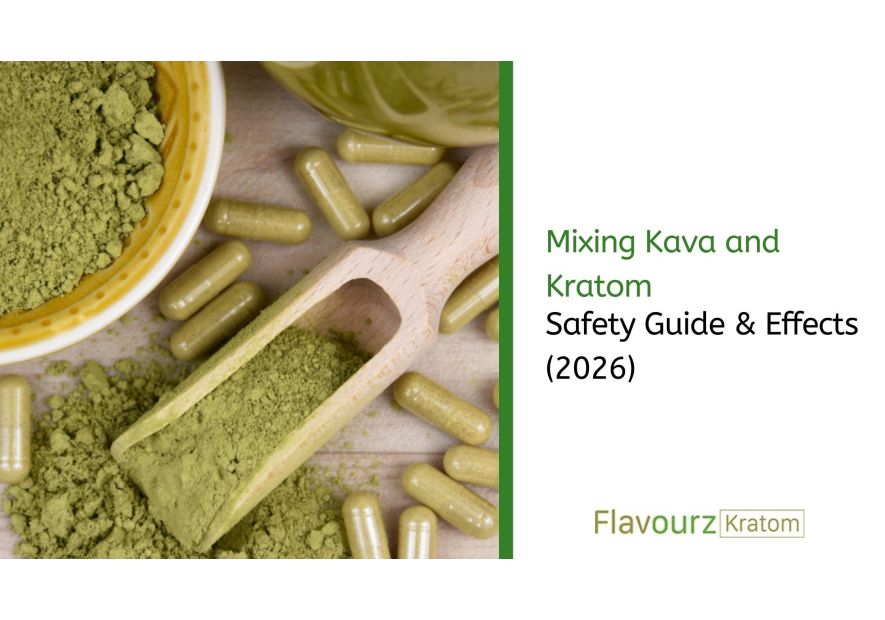
Mixing Kava and Kratom: Safety Guide & Effects (2026)
Last Updated: April 2026
Mixing kava and kratom is one of the most searched topics in the botanical wellness space, and also one of the most poorly answered. Most articles either dismiss the combination as dangerous without data or promote it enthusiastically without acknowledging the real risks. The truth sits in the middle and is far more nuanced: a 2024 randomized controlled trial found the combination to be generally safe for healthy adults in the short term, while the established pharmacology of both plants reveals a specific liver enzyme interaction that creates genuine risks for anyone on prescription medications.
At Flavourz Kratom, we approach topics like this with the same standard we hold our products to: documented evidence, honest assessment, and no oversimplification in either direction. For those seeking alternative kratom consumption methods, our comprehensive kratom seltzer review guide covers convenient beverage options that may complement your botanical wellness routine. This guide covers what kava and kratom are, how they interact biochemically, what the clinical trial data actually shows, who should avoid the combination, and how to use it safely if you choose to.
What Are Kava and Kratom?
Kava and kratom are botanically unrelated plants from different parts of the world that produce some overlapping effects through entirely different mechanisms. Understanding those mechanisms is the prerequisite for understanding their interaction.
Kratom (Mitragyna speciosa) is a tropical tree native to Southeast Asia whose leaves contain over 40 alkaloids. The primary active compounds are mitragynine and 7-hydroxymitragynine, which interact with opioid receptors in the central nervous system. At low doses, kratom is stimulating — increasing energy, focus, and sociability. At higher doses, effects shift toward relaxation, analgesia, and sedation. Mitragynine is metabolized primarily by the CYP3A4 liver enzyme, which converts it partially into the more potent 7-hydroxymitragynine.
Kava (Piper methysticum) is a plant native to the Pacific Islands whose roots contain active compounds called kavalactones. Kavalactones interact with GABA-A receptors, voltage-gated sodium channels, and dopamine receptors — a distinctly different receptor profile from kratom's opioid pathway. The primary effects of kava are anxiolytic (anxiety-reducing), muscle-relaxing, and mildly euphoric, without significant sedation at normal doses. Traditional kava consumption in Pacific Island cultures involves ceremonial preparation as a cold-water root infusion drunk communally.
| Property | Kratom | Kava |
|---|---|---|
| Plant origin | Southeast Asia (Mitragyna speciosa) | Pacific Islands (Piper methysticum) |
| Active compounds | Mitragynine, 7-hydroxymitragynine (40+ alkaloids) | Kavalactones (kavain, dihydrokavain, etc.) |
| Primary receptors | Opioid receptors (μ, δ, κ) | GABA-A, voltage-gated sodium channels, dopamine |
| Primary effects | Energy (low dose), sedation/analgesia (high dose) | Anxiolytic, muscle relaxation, mild euphoria |
| Liver enzyme pathway | CYP3A4 (primary), UGT2B7, UGT1A1 | CYP3A4, CYP2D6, reduces liver glutathione |
| Dependence risk | Moderate with daily use | Low-moderate with heavy use |
| Legal status (US) | Legal federally, restricted in some states | Legal in all 50 states |
What Happens When You Mix Kava and Kratom?
When kava and kratom are combined, their effects interact at two levels: the experiential level (what you feel) and the pharmacological level (what happens in your liver and central nervous system). Both levels matter, and they tell different stories about the combination.
Experiential Effects of the Combination
At the experiential level, kava and kratom are largely complementary. Kava's GABA-A receptor activity produces anxiolytic and muscle-relaxing effects through a different pathway than kratom's opioid receptor activity. Users who combine the two report:
- Enhanced relaxation: Kava's GABA-A anxiolytic effect combines with kratom's higher-dose relaxation to produce deeper physical and mental calm than either alone at equivalent doses
- Smoother onset: According to Real Botanicals, kava can help smooth the onset of kratom's beneficial properties — the GABA-mediated anxiolysis potentially reduces the mild anxiety some users experience during kratom's initial onset
- Amplified mood uplift: Both plants independently produce mood enhancement through different receptor systems, and users seeking mood-focused strains can explore our best kratom for mood enhancement collection for targeted options. Combined, users report a broader, warmer mood improvement than either plant alone
- Full-body stress relief: The combination of kratom's opioid-pathway analgesia and kava's muscle-relaxing kavalactones produces a more comprehensive physical relaxation than single-agent use
- Increased sedation at higher doses: The convergent sedative properties of both plants compound at higher doses, producing stronger drowsiness and cognitive slowing than either plant alone — a risk to be managed carefully
The Critical Pharmacological Interaction: Shared CYP3A4 Inhibition
This is the most important and most underreported aspect of the kava-kratom combination. Both plants independently inhibit the CYP3A4 liver enzyme — the same enzyme responsible for metabolizing a large proportion of pharmaceutical medications. When both are taken simultaneously, their CYP3A4 inhibitory effects are additive.
According to published pharmacology literature on kava's hepatotoxic mechanisms (Science Direct), three mechanisms contribute to kava's liver enzyme effects: inhibition of cytochrome P450 enzymes (including CYP3A4), decreased liver glutathione levels, and inhibition of cyclooxygenase enzyme activity. Research documented by Flagler Healing adds that mitragynine additionally inhibits UGT2B7 and UGT1A1 hepatic enzymes, further reducing clearance of other medications in the system.
The practical implication: if you take any prescription medication metabolized by CYP3A4, combining kava and kratom can significantly increase that medication's blood concentration — in some cases to dangerous levels. This is not a theoretical risk. It is a documented drug interaction mechanism that warrants a physician consultation before any combined use alongside pharmaceuticals.
What the Clinical Trial Actually Shows
In December 2024, the first published randomized, double-blind, placebo-controlled trial specifically investigating the safety of a kava-kratom combination was published in PMC (Cureus). The product studied was Feel Free Classic Tonic (FFCT), with each 15mL serving containing:
- 410mg kava extract standardized to 30% kavalactones (= 123mg kavalactones)
- 840mg kratom dried leaf powder (12.5mg mitragynine, under 0.05mg 7-hydroxymitragynine)
Three dosage groups received one, two, or three daily servings over six consecutive days. Key findings:
- Short-term safety in healthy adults: generally confirmed. No significant changes in liver function tests, kidney function, or hematology across any dosage group
- Adverse events were mild to moderate — predominantly nausea, headaches, and fatigue, primarily in the high-dose group (three servings per day)
- Vital signs stayed within normal physiological ranges, though statistically significant changes in blood pressure and respiratory rate were observed
- A small but statistically significant COWS (Clinical Opiate Withdrawal Scale) increase was observed in the high-dose group on day 7 — a mild withdrawal signal following only six days of high-dose use
- This was the first published clinical trial to specifically study the combined product, and the authors explicitly note that long-term safety data does not yet exist
The takeaway from this trial is precise: a moderate dose of a standardized kava-kratom blend was safe for healthy adults over six days. It does not mean unlimited combined use is safe, it does not apply to people with liver conditions or on CYP3A4-metabolized medications, and the day-7 withdrawal signal at high doses is a meaningful caution even within a short trial window.
Liver Risk: What the Research Actually Says
Liver safety is the most discussed concern with both plants individually, and it becomes more relevant in combination. A 2016 review published in PubMed examining "the 3Ks" (kava, kratom, and khat) found that all three herbals are associated with potential liver injury in patterns that remain partially characterized. Kava hepatotoxicity is the most documented of the three, with numerous case reports of severe hepatotoxicity in both the US and Europe linked primarily to acetone/ethanol kava extracts (not traditional water-based preparations).
The liver risk picture in practical terms:
- Traditional water-based kava (prepared from noble kava root using the traditional cold-water infusion method) has a strong historical safety record spanning centuries in Pacific Island cultures. Hepatotoxicity cases are almost exclusively associated with acetone or ethanol kava extracts, not traditional preparations.
- Kratom liver injury cases exist in the literature but are rare and typically associated with chronic high-dose use. The 2024 clinical trial found no liver function changes at moderate doses over six days.
- Combined use introduces the additive CYP450 inhibition concern — even if neither plant harms the liver directly at normal doses, their combined enzyme suppression could amplify the hepatotoxic potential of any co-administered liver-processed substance.
- Pre-existing liver conditions are a firm contraindication for either plant individually, and especially for the combination.
Who Should NOT Mix Kava and Kratom
The following groups should avoid combining kava and kratom without direct physician guidance:
- Anyone taking prescription medications metabolized by CYP3A4 or CYP2D6 — this includes many statins, blood pressure medications, antidepressants, antifungals, HIV medications, and immunosuppressants. The combined CYP inhibition of kava + kratom can dramatically increase blood concentrations of these drugs.
- Anyone with pre-existing liver conditions including fatty liver, hepatitis, cirrhosis, or elevated liver enzymes from any cause.
- Anyone taking other CNS depressants including alcohol, benzodiazepines, opioids, sleep aids, or muscle relaxants — the combined sedative effect of kava + kratom at higher doses amplifies CNS depression from all sources.
- Pregnant or nursing women — neither plant has established safety data in pregnancy.
- Anyone with a history of substance use disorder — the day-7 COWS signal in the 2024 trial, though mild, indicates even short-term high-dose use produces early withdrawal markers.
- People under 18 — developing neurological systems are more susceptible to both plants' receptor-modulating effects.
Safe Use Protocol for Kava and Kratom Together
For healthy adults with no contraindications choosing to combine kava and kratom, the following protocol minimizes risk based on available evidence:
- Use traditional noble kava, not extract: Noble kava varieties prepared as a cold-water infusion have the strongest historical safety record. Commercial kava extracts — particularly those in tablets or capsules made with acetone or ethanol — are associated with the hepatotoxicity cases in the literature. Many commercial kava-kratom products like Feel Free use standardized kava extract, which is the form studied in the 2024 trial. Either approach can be appropriate, but traditional preparation has the longer safety record.
- Start at the lowest documented dosage: The 2024 trial used 123mg kavalactones + 12.5mg mitragynine as the single-serving dose with acceptable safety. This is the most evidence-backed starting point for first-time combined use. Do not begin above this threshold.
- Use standard-dose kratom, not extracts, in combination: Combining kava with kratom extract amplifies both the effect intensity and the CYP3A4 enzyme load significantly beyond what the safety trial data covers. Whole-leaf kratom powder is the appropriate form for combined use. Our quality lab-tested kratom carries published COAs confirming alkaloid content for accurate dosing.
- Never combine with alcohol: Kava already potentiates alcohol sedation through shared GABA-A receptor activity. Adding kratom to a kava-alcohol combination produces compound CNS depression that is genuinely dangerous.
- Limit frequency to 2–3 times per week maximum: The day-7 withdrawal signal in the high-dose trial group is a clear indicator that daily combined use builds physical dependence faster than either plant alone.
- Take on an empty stomach for predictable onset: Both plants absorb more consistently on an empty stomach. Full stomach use produces erratic onset timing that leads to re-dosing before the first dose peaks — the most common source of accidental over-consumption with this combination.
- Disclose to your physician: The CYP3A4 interaction is relevant to any medication review. Inform your doctor of both substances if you're under any prescription drug treatment.
Combined Dosage Reference: Based on Clinical Trial Data
| Dose Tier | Kavalactones | Mitragynine (kratom) | Safety Profile (from RCT) | Who It's For |
|---|---|---|---|---|
| Low (1 serving FFCT) | ~123mg | ~12.5mg | Best tolerated, mild AEs | Beginners, occasional use |
| Moderate (2 servings) | ~246mg | ~25mg | Acceptable safety, more nausea | Regular users, known tolerance |
| High (3 servings) | ~369mg | ~37.5mg | Higher AEs, withdrawal signal day 7 | Not recommended for daily use |
For individual kratom dosing protocols outside of a kava combination, our kratom dosage guide provides strain-specific calibration across all experience levels. And for users exploring kava specifically for anxiety relief alongside kratom, our kratom for anxiety guide covers the strains best suited for that use case and how the combination compares to single-strain approaches.
Does Kava Make Kratom Stronger?
Yes — through two distinct mechanisms. First, kava's kavalactone-driven CYP3A4 inhibition slows the metabolism of mitragynine in the liver, allowing more of it to remain active in the bloodstream for longer — the same mechanism by which grapefruit juice potentiates kratom, as covered in our kratom potentiation guide. Second, kava's GABA-A receptor activity produces anxiolytic and relaxant effects through a complementary pathway that compounds with kratom's opioid-pathway relaxation, producing a combined sedation effect stronger than either plant in isolation.
The practical implication: when using kava and kratom together, use 20–30% less kratom than your normal solo kratom dose. The kava-driven CYP3A4 inhibition effectively increases your kratom's potency per gram. Not accounting for this is the most common source of adverse effects reported by first-time combination users.
Feel Free Classic Tonic: What to Know
Feel Free Classic Tonic (FFCT) is the most widely available commercial kava-kratom product in the US market, sold in gas stations, smoke shops, and health food stores. It was the product specifically studied in the 2024 PMC clinical trial. Each 15mL serving contains 410mg kava extract (30% kavalactones = 123mg) and 840mg kratom powder (12.5mg mitragynine).
Key points from both the clinical data and independent safety reviews:
- The 2024 RCT confirmed single and double serving doses are generally safe for healthy adults over six days — this is a genuine data point that supports the product's short-term safety profile
- The withdrawal signal at triple servings (three per day) over six days is a red flag for daily high-dose use habits building faster than users recognize
- As noted by Pyramid Healthcare, Feel Free is marketed as a "plant-based tonic" in ways that may understate how pharmacologically active the contents are — particularly for consumers who don't recognize that both kava and kratom carry dependence risk with daily high-dose use
- It's a legitimate product category backed by real clinical data — but it should be treated with the same informed approach as any other botanical supplement with receptor activity
Frequently Asked Questions
 Frequently Asked Questions.jpg)
Do kava and kratom damage the liver?
Taken individually at normal doses short-term, neither plant shows significant liver enzyme changes in healthy adults, as confirmed by the 2024 clinical trial. Kava hepatotoxicity cases in the literature are primarily associated with acetone/ethanol kava extracts rather than traditional water-based preparations. Kratom liver injury is rare and associated with chronic high-dose use. Combined use introduces additive CYP450 inhibition that increases liver strain risk, particularly in people with existing liver conditions or co-administered liver-metabolized medications. Anyone with liver enzyme e
How much kava and kratom can you take together?
Based on the 2024 PMC clinical trial, the best-tolerated combined dose is approximately 123mg kavalactones (from 410mg 30% extract) plus 12.5mg mitragynine (from roughly 840mg whole-leaf kratom powder) — equivalent to one FFCT serving. This is the evidence-anchored low dose. Double this produces acceptable safety with more nausea. Triple this produces higher adverse events and a mild withdrawal signal after six days. Always reduce your normal solo kratom dose by 20–30% when adding kava, as kava's CYP3A4 inhibition increases kratom's effective potency per gram.
Can you take kava and kratom for anxiety?
Both plants independently have documented anxiolytic properties — kava through GABA-A receptor activity and kratom through opioid-receptor mood modulation. The combination can produce stronger anxiety relief than either alone at the doses described above. However, for chronic anxiety management, both the CYP450 drug interaction risk and the dependence potential at daily use doses are significant enough that a physician consultation is warranted before using this combination therapeutically on a regular basis. Our kratom for anxiety guide covers strain-specific approaches that may be appropriat
What does kava and kratom feel like together?
At low to moderate doses, users consistently describe the kava-kratom combination as producing a warm, relaxed, mentally clear state with less anxiety than kratom alone, broader mood uplift than kava alone, and a smoother onset curve than either plant taken separately. The kava component mutes the mild agitation that some users experience during kratom's onset, while the kratom component adds motivation and focus that kava alone doesn't provide. At higher doses, the combination shifts toward deeper sedation and cognitive slowing — an effect profile more appropriate for evening relaxation than
How long does the kava and kratom combination last?
The combined effects of kava and kratom typically last 4–6 hours, with onset occurring within 20–45 minutes when taken on an empty stomach. Kava's GABA-mediated relaxation peaks around 60–90 minutes and gradually fades, while kratom's opioid-pathway effects can extend slightly longer depending on the strain and serving size. Higher doses may extend duration toward 5–7 hours but also increase the chance of unwanted effects like nausea, fatigue, and excessive sedation. The CYP3A4 inhibition from kava can also prolong kratom's effects by slowing its metabolism, making the combined experience last longer than kratom alone.
How should I store kava and kratom products together?
Both kava and kratom should be stored in airtight containers at consistent room temperature between 68–72°F, in a dark, dry location like a pantry shelf or kitchen drawer. Kava root powder and kratom powder are both sensitive to moisture, sunlight, and heat, which can degrade their active compounds over time. Adding a desiccant packet inside each container helps absorb moisture and extends freshness, while keeping the original sealed packaging closed until use preserves quality longer. Commercial kava-kratom products like Feel Free Classic Tonic should follow the manufacturer's storage instructions, typically lasting 12–18 months unopened and shorter once opened.
Can I take kava and kratom every day?
Daily use of kava and kratom together is strongly discouraged based on the 2024 clinical trial findings, which showed a mild withdrawal signal in the high-dose group after just six consecutive days. Most experienced users limit combined use to 2–3 times per week maximum, with rest days between sessions to prevent dependence buildup and tolerance. Daily use of either plant individually carries dependence risks, and combining them amplifies that risk through their compounding effects. If you find yourself wanting to use the combination daily, taking a 7–14 day break is recommended before resuming.
What is the best time of day to take kava and kratom together?
The kava-kratom combination is best suited for late afternoon or evening use due to its combined relaxing and mildly sedating effects, which can interfere with morning productivity. Many users prefer it as a wind-down ritual after work, taking it 2–3 hours before bed to allow effects to peak and gradually fade. Morning use is generally not recommended because the combination's sedative properties can cause drowsiness and reduced focus throughout the day. Avoid taking it within 4 hours of operating vehicles or machinery due to the cognitive slowing effects at moderate to high doses.
Disclaimer: This article is for informational and educational purposes only. Neither kratom nor kava is FDA-approved to treat, diagnose, cure, or prevent any disease or condition. This content is not medical advice. Consult a qualified healthcare provider before using either substance, especially if you take prescription medications, have liver conditions, or have a history of substance use disorder.
Last Updated: April 2026 | Flavourz Kratom has served over 10,000 customers since 1999. Shop our full kratom selection here.

Leave a comment