
Taking Kratom on Empty Stomach: 10 Pros, Cons & Tips 2026
Last Updated: April 2026
Taking kratom on an empty stomach produces faster, stronger effects, with onset in 15-30 minutes compared to 45-90 minutes with food. The main pros include quicker absorption, enhanced potency at lower doses, and more predictable results. The cons include increased nausea risk, potential stomach irritation, and more intense effects that can overwhelm beginners. At Flavourz Kratom, we've helped over 10,000 customers find their ideal timing since 1999, and the empty stomach question is one of the most common we encounter.
Here's the reality: about 7 out of 10 experienced kratom users take their dose on an empty stomach for maximum effect. But that approach isn't right for everyone. Some people get miserable nausea. Empty stomach timing varies significantly between different kratom varieties, so review our comprehensive strain comparison to optimize your consumption schedule. Others find the intensity too much. And beginners almost always do better starting with food in their system.
Over 5 years of personal use and countless customer conversations, I've tested both approaches extensively and documented what actually works. This guide breaks down the 10 key pros and cons, plus practical tips to help you decide what's best for your body.
Quick Reference: Empty Stomach vs. With Food
| Factor | Empty Stomach | With Food |
|---|---|---|
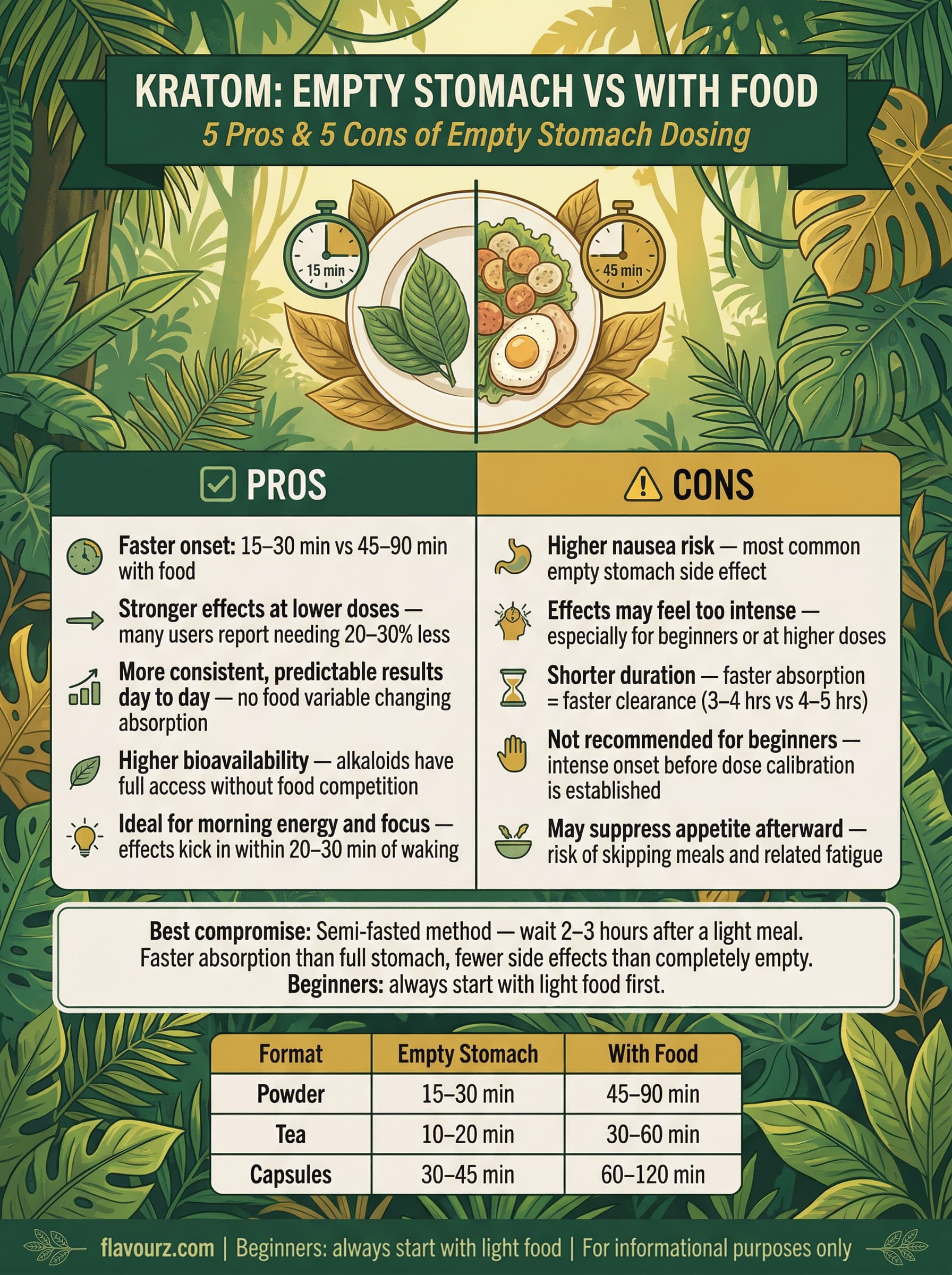
| Onset time | 15-30 minutes | 45-90 minutes |
| Effect intensity | Stronger, sharper | Milder, gentler |
| Duration | 3-4 hours typical | 4-5 hours typical |
| Nausea risk | Higher | Lower |
| Dose needed | Often lower | May need slightly more |
| Best for | Experienced users, fast effects | Beginners, sensitive stomachs |
What "Empty Stomach" Actually Means
Before diving into the pros and cons, let's define what we're talking about. An "empty stomach" means your stomach has finished digesting your last meal. Practically speaking:
- 2-3 hours after a light meal (fruit, toast, small snack)
- 3-4 hours after a moderate meal (typical lunch or dinner)
- 4-6 hours after a heavy meal (large dinner, fatty foods)
- First thing in the morning before eating anything
Many experienced users rely on the "semi-fasted" approach: waiting 2-3 hours after a light meal before taking kratom. This provides most of the absorption benefits while reducing nausea risk compared to a truly empty stomach.
5 Pros of Taking Kratom on an Empty Stomach
Pro 1: Faster Onset (15-30 Minutes)
The most significant benefit of empty stomach dosing is speed. Without food to compete with, kratom powder moves quickly through your digestive system. The active alkaloids, primarily mitragynine and 7-hydroxymitragynine, are absorbed into your bloodstream efficiently.
On an empty stomach, most users feel effects within 15-30 minutes. With food, onset can delay to 45-90 minutes depending on what and how much you ate. For people who need kratom to work quickly, whether for morning energy, focus before a task, or managing discomfort, this speed difference matters significantly.
Pro 2: Stronger Effects at Lower Doses
Empty stomach absorption means more of the alkaloids reach your system without interference. The result: stronger, more pronounced effects from the same dose. Many users report needing 20-30% less kratom when taken on an empty stomach compared to with food.
This has practical benefits beyond just stronger effects. Using lower doses means less kratom consumed, which reduces tolerance buildup over time. It's also more cost-effective. If 3 grams on an empty stomach produces the same effect as 4 grams with food, you're extending your supply significantly.
Pro 3: More Predictable, Consistent Results
Food creates variability. Different meals, different absorption rates. A fatty meal might delay kratom by 90 minutes; a light salad might only add 30 minutes. This unpredictability makes it harder to plan your kratom experience.
Empty stomach dosing removes this variable. Your onset and intensity become more consistent from day to day because there's no food interaction changing the equation. This predictability helps you dial in your ideal dose and timing with confidence.
Pro 4: Higher Bioavailability
Bioavailability refers to the percentage of a substance that actually enters your bloodstream and becomes available for your body to use. When kratom competes with food for absorption space in your digestive tract, some alkaloids may bind to food particles or pass through without being absorbed.
On an empty stomach, kratom has full access to your stomach lining and intestinal walls. More alkaloids get absorbed, which means you're getting more from each gram of kratom you take.
Pro 5: Better for Morning Energy and Focus
If you use kratom for morning energy or focus, empty stomach dosing aligns perfectly with the natural morning routine. Taking Green Maeng Da or another energizing strain first thing in the morning, before breakfast, lets effects kick in during your most productive hours.
The fast onset means you feel the energy boost within 20-30 minutes, right when you're starting your day. You can then eat breakfast 30-60 minutes later once effects have established, without significantly diminishing them.
5 Cons of Taking Kratom on an Empty Stomach
Con 1: Increased Nausea Risk
This is the biggest downside. Nausea is one of the most common kratom side effects, and empty stomach dosing significantly increases the risk. Studies show gastric side effects like nausea account for over 12% of reported kratom adverse effects.
Why does this happen? Kratom's alkaloids can irritate an empty stomach lining. Without food to buffer, the concentrated plant matter hits your stomach directly. The bitter compounds may also trigger nausea receptors more intensely when there's nothing else in your system.
For some users, this nausea is mild and passes quickly. For others, it ruins the entire experience. If you're prone to stomach sensitivity, empty stomach dosing may not be worth the tradeoffs.
Con 2: Effects May Feel Too Intense
Faster absorption and higher bioavailability mean stronger effects. This isn't always desirable. For beginners especially, the intensity can feel overwhelming. What would have been a pleasant, gradual onset with food becomes a sudden rush that's uncomfortable.
Experienced users sometimes appreciate this intensity, but even they can misjudge. Taking your usual dose on an empty stomach when you're used to eating first can produce unexpectedly strong effects. This is why dose reduction is important when switching to empty stomach dosing.
Con 3: Shorter Duration of Effects
Here's a tradeoff many people don't expect: faster absorption often means shorter duration. When kratom hits your system quickly, it also metabolizes and clears more quickly. Effects that might last 4-5 hours with food may only last 3-4 hours on an empty stomach.
For people who need sustained effects throughout a workday or evening, this shorter duration creates a dilemma. You get stronger initial effects but may need to redose sooner, which comes with its own issues around tolerance and daily limits.
Con 4: Not Recommended for Beginners
If you're new to kratom, empty stomach dosing is risky. You don't yet know how your body responds to kratom. The intense onset can cause nausea, dizziness, or anxiety before you've had a chance to find your comfortable dose range.
Most beginner's guides recommend starting with a light meal before your first kratom experiences. This provides a gentler introduction, reduces side effect risk, and gives you a baseline to compare against when you eventually try empty stomach dosing.
Con 5: Harder to Eat Afterward
Kratom can suppress appetite, especially at higher doses. When you take kratom on an empty stomach and then don't feel like eating for several hours, you can end up going most of the day without proper nutrition. This creates fatigue, mood issues, and other problems unrelated to kratom itself.
Some users find that once kratom kicks in strongly, the thought of food becomes unappealing. If this describes you, eating before kratom ensures you've already had a meal, even if you don't feel hungry afterward.
10 Practical Tips for Empty Stomach Dosing
Tip 1: Start with Lower Doses
If you normally take 4 grams with food, start with 2.5-3 grams on an empty stomach. The increased bioavailability means you'll likely get similar or stronger effects from the reduced amount. You can always increase next time if needed, but you can't undo an overwhelming dose.
Tip 2: Wait 2-3 Hours After Eating (Semi-Fasted Method)
The semi-fasted approach is often the sweet spot. Instead of truly empty stomach (morning, fasted), wait 2-3 hours after a light meal. Your stomach is mostly empty, so absorption is still fast, but there's enough food residue to buffer against irritation. Many regular users consider this the best compromise.
Tip 3: Have Ginger Ready for Nausea
Ginger is a proven natural remedy for nausea. Studies confirm it can prevent and reduce nausea symptoms, including in chemotherapy patients. For kratom users, keeping ginger tea, ginger chews, or crystallized ginger on hand provides an effective safety net.
Some users proactively add ginger to their kratom dose. Mix fresh grated ginger into kratom tea, or chew a piece of ginger before taking kratom powder. This can prevent nausea before it starts rather than waiting to treat it after.
Tip 4: Stay Well Hydrated
Dehydration worsens kratom nausea and can cause dizziness. When taking kratom on an empty stomach, drink 8-16 ounces of water before your dose, then another glass with the dose itself. Continue hydrating throughout the day. Proper hydration also supports efficient alkaloid absorption.
Tip 5: Use Tea for Gentler Empty Stomach Dosing
If powder causes stomach irritation on an empty stomach, try kratom tea instead. When you brew kratom into tea and strain out the plant material, you remove the fibers, chlorophyll, and other compounds that can irritate the stomach. Only the alkaloids transfer into the water.
Tea is gentler on the digestive system while still providing fast absorption because the alkaloids are already dissolved in liquid. The tradeoff is slightly reduced potency (some alkaloids stay in the strained material), but for sensitive stomachs, this is often worth it.
Tip 6: Avoid the Toss and Wash Method on Empty Stomach
The toss and wash method, where you put dry powder in your mouth and wash it down with liquid, can be harsh on an empty stomach. The concentrated powder hits your stomach lining directly. Consider mixing powder into a smoothie, juice, or beverage instead for more gradual stomach contact.
Tip 7: Eat a Light Meal 30-60 Minutes After Dosing
Once effects have established (usually 30-60 minutes after dosing), eating a light meal won't significantly diminish your kratom experience but will provide necessary nutrition. Don't skip meals just because kratom suppresses appetite. Plan to eat something light once you've felt the effects begin.
Tip 8: Citrus Juice May Enhance Absorption
Some users report that acidic citrus juices, like orange juice or grapefruit juice, enhance kratom absorption. The theory is that the acidity helps extract alkaloids and may improve bioavailability. Grapefruit specifically contains compounds that slow kratom metabolism, potentially extending effects.
If using citrus, drink it with your kratom dose rather than separately. This puts the acidic environment directly in contact with the kratom as it's absorbed.
Tip 9: Keep Antacids Available
For users prone to stomach acidity issues, taking an antacid 30 minutes before kratom can help neutralize stomach acid and reduce irritation. This provides a buffer similar to food without delaying absorption as significantly. Over-the-counter options like Tums or Prilosec work for many users.
Tip 10: Track Your Experiences
Keep a simple log noting: time of last meal, time of kratom dose, dose amount, strain, and how you felt. After a few weeks, you'll identify your personal patterns. Some people do fine on completely empty stomach; others need 2 hours after eating; others do better with food. Your body's preferences become clear with tracking.
Timing Guidelines by Situation
Different goals call for different timing approaches. Here's what works for specific situations based on customer feedback and personal experience.
Morning Energy and Focus
Take kratom first thing in the morning, before breakfast, for maximum stimulating effects. White or green strains like White Maeng Da work best for energy. Effects kick in within 20-30 minutes. Eat breakfast 30-60 minutes after dosing once effects have established.
Afternoon Productivity
Wait 2-3 hours after lunch for semi-fasted absorption. This provides fast onset without the intensity of truly empty stomach dosing. Green strains work well for sustained focus through the afternoon.
Evening Relaxation
For Red Bali or other relaxing strains in the evening, taking with a light dinner or 2 hours after works well. The slightly slower onset creates a gradual relaxation rather than sudden sedation. This gentler approach suits winding down.
Pain or Discomfort Management
If using kratom for physical comfort, empty stomach provides faster relief. However, if you need sustained effects throughout the day, consider eating a light meal with your dose to extend duration even if intensity is slightly reduced.
Sensitive Stomach Users
Always take with a light meal or at minimum a small snack. Crackers, toast, banana, or yogurt provide enough buffer to reduce irritation without significantly delaying effects. Better to have milder effects than spend the experience feeling nauseous.
Powder vs. Capsules on Empty Stomach
The form of kratom you use affects empty stomach dynamics.
Kratom Powder
Powder absorbs fastest on an empty stomach. Effects begin in 15-30 minutes. However, powder can also irritate the stomach more because the plant material contacts your stomach lining directly. If you experience nausea with powder on empty stomach, try tea preparation or capsules instead.
Kratom Capsules
Kratom capsules add 10-20 minutes to onset time because the gelatin or vegetable shell must dissolve first. On an empty stomach, capsule effects begin in 30-45 minutes. Some users find capsules gentler on empty stomach than powder because the shell provides a buffer before powder contacts the stomach lining.
The tradeoff: capsules are slower and may feel slightly less potent than powder at the same dose. But for people who get nausea from powder on empty stomach, capsules offer a middle ground.
Kratom Tea
Tea prepared by steeping and straining kratom is often the gentlest option for empty stomach dosing. The alkaloids are already dissolved in liquid, and the fibrous plant material that causes stomach irritation is removed. Onset is 15-25 minutes, similar to powder but without the irritation risk.
Special Situations
What About Intermittent Fasting?
If you practice intermittent fasting, kratom fits naturally into fasted periods. Kratom itself contains minimal calories and won't break most fasting protocols. The empty stomach during fasting windows provides ideal absorption conditions. Just be aware that extended fasting may make kratom effects feel more intense due to altered metabolism.
Taking Kratom Before Exercise
For pre-workout energy, empty stomach dosing 30-45 minutes before exercise allows effects to peak during your workout. However, exercise on a completely empty stomach with kratom can cause lightheadedness for some people. Consider a small snack (banana, handful of nuts) 2 hours before your dose to avoid this.
Kratom Before Bed
If using relaxing red strains before bed, eating a light dinner first often works better than empty stomach. The slower onset creates a gradual relaxation that transitions into sleep more naturally than a sudden sedative effect.
Signs You Should Avoid Empty Stomach Dosing
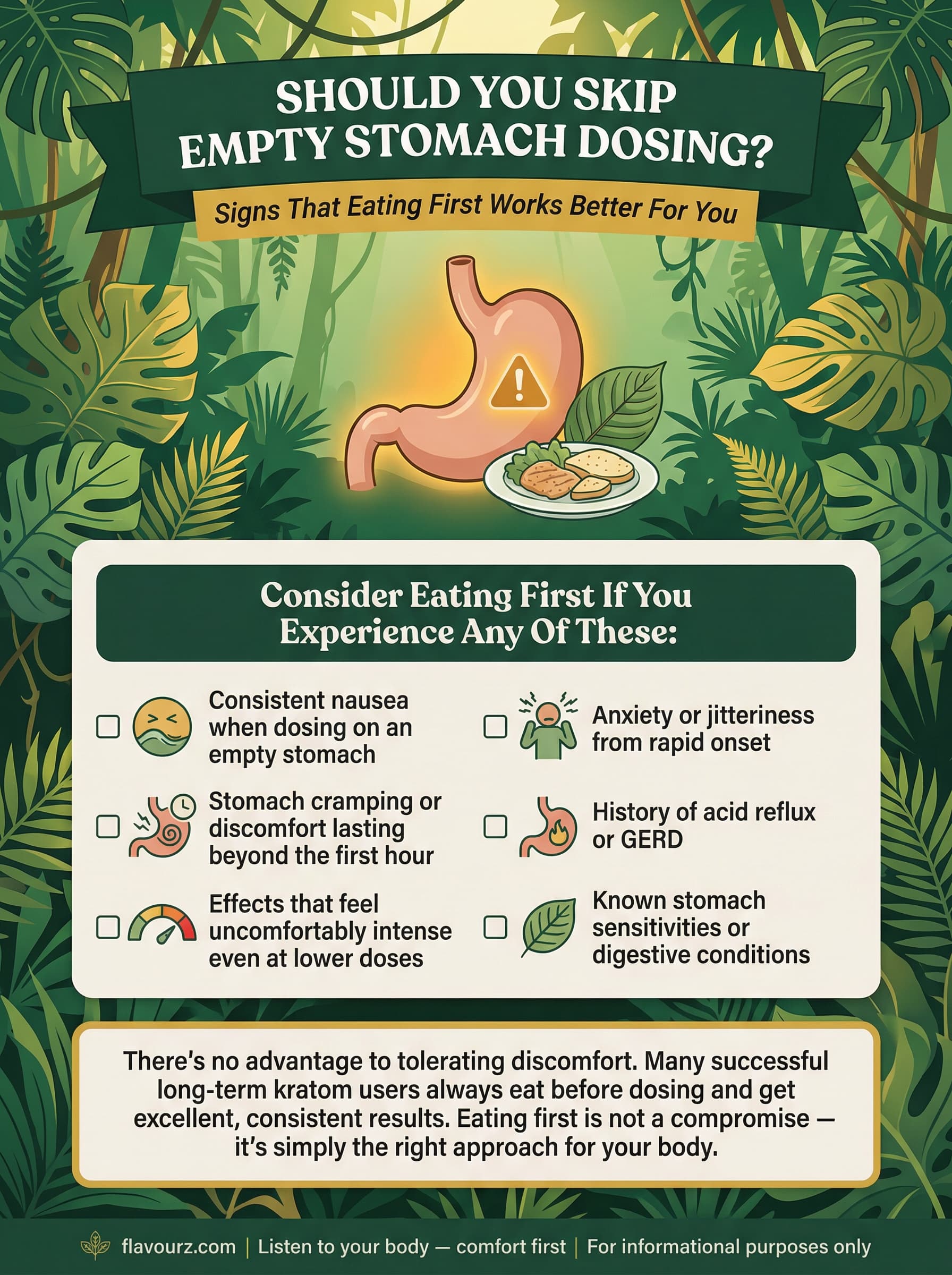
Empty stomach dosing isn't right for everyone. Consider switching to eating first if you experience:
- Consistent nausea when dosing on empty stomach
- Stomach cramping or discomfort that lasts beyond the first hour
- Effects that feel uncomfortably intense even at lower doses
- Anxiety or jitteriness from rapid onset
- History of acid reflux or GERD
- Diagnosed stomach sensitivities or digestive conditions
There's no badge of honor for tolerating empty stomach dosing if it makes you feel bad. Many successful long-term kratom users always eat before their dose and have excellent results.
Decision Framework: Should You Take Kratom on Empty Stomach?
Use this framework to decide:
Take on empty stomach if:
- You need fast onset (under 30 minutes)
- You're experienced with kratom and know your body's response
- You don't typically experience nausea or stomach sensitivity
- You prefer stronger, sharper effects
- You want to use a lower dose for cost and tolerance reasons
Take with food if:
- You're new to kratom
- You have a sensitive stomach or history of digestive issues
- You've experienced nausea on empty stomach before
- You prefer gentler, more gradual onset
- You need longer duration of effects
Use the semi-fasted method (2-3 hours after light meal) if:
- You want fast absorption with reduced nausea risk
- Pure empty stomach is too intense but food delays too much
- You're transitioning from always eating to trying empty stomach
Frequently Asked Questions
Should I take kratom on an empty stomach?
It depends on your experience level and stomach sensitivity. Empty stomach provides faster onset (15-30 minutes) and stronger effects but increases nausea risk. Beginners should start with food. Experienced users who don't get nausea often prefer empty stomach for maximum effectiveness. The semi-fasted method (2-3 hours after eating) works well for most people.
How long after eating should I take kratom?
Wait 2-3 hours after a light meal or 3-4 hours after a moderate meal for optimal absorption. After heavy or fatty meals, wait 4-6 hours. First thing in the morning before eating provides the fastest absorption. The semi-fasted approach (2-3 hours after light meal) balances fast absorption with reduced nausea risk.
Does kratom work better on an empty stomach?
Kratom absorbs faster and produces stronger effects on an empty stomach due to higher bioavailability and no food competition. Effects begin in 15-30 minutes versus 45-90 minutes with food. However, "better" depends on your goals. If you prioritize gentler onset and longer duration, taking kratom with food may actually work better for you.
Why does kratom make me nauseous on an empty stomach?
Kratom's alkaloids can irritate an empty stomach lining, triggering nausea. The concentrated plant matter hits your stomach directly without food to buffer. Higher bioavailability also means stronger effects, which can include nausea as a side effect. To reduce nausea, try the semi-fasted method, lower your dose, add ginger, or switch to kratom tea.
How long does kratom take to work on an empty stomach?
On an empty stomach, kratom powder typically works within 15-30 minutes. Capsules take 30-45 minutes due to shell dissolution. Tea onset is 15-25 minutes. With food, onset extends to 45-90 minutes. Individual metabolism, dose size, and strain also influence timing.
What should I eat before taking kratom?
Light foods work best: toast, crackers, banana, yogurt, small portion of fruit. These provide stomach protection without significantly delaying absorption. Avoid heavy, fatty meals which can delay onset by 60-90 minutes. If using the semi-fasted method, any light meal 2-3 hours before dosing works well.
Can I eat after taking kratom?
Yes, but wait 30-60 minutes after dosing for effects to establish. Eating immediately after kratom can slow absorption and reduce intensity. Once effects have begun, eating a meal won't significantly diminish them. Planning to eat 30-60 minutes post-dose ensures you get nutrition even if kratom suppresses appetite.
Does food make kratom less effective?
Food delays absorption and can reduce peak intensity, but it also extends duration. Taking kratom with food produces milder, more gradual effects that last 1-2 hours longer than empty stomach dosing. For some purposes, like sustained all-day benefits, food actually improves effectiveness by smoothing out the experience.
Final Thoughts
The empty stomach question doesn't have a universal answer. It depends on your body, your experience level, your goals, and your tolerance for potential side effects. What I can tell you from 5 years of personal use and helping thousands of customers: most experienced users end up preferring some version of empty or semi-fasted dosing for the faster, stronger effects. But plenty of successful long-term users always eat first and wouldn't have it any other way.
Start with food if you're new. Experiment with the semi-fasted method as you gain experience. Try true empty stomach dosing only after you know how your body responds and you've reduced your dose to account for increased absorption. Track your experiences and let your body guide you to your ideal approach.
At Flavourz Kratom, we've been helping customers optimize their kratom experience since 1999. Whatever timing approach works best for you, quality kratom makes the difference. If you have questions about timing, dosing, or anything else, we're here to help.
Disclaimer: These statements have not been evaluated by the FDA. Kratom is not intended to diagnose, treat, cure, or prevent any disease. Consult a healthcare professional before using kratom, especially if you have medical conditions or take medications. Must be 21+ to purchase. Not available in all states.

Leave a comment