

Kratom Drug Interactions: 15 Combinations to Avoid 2026
Last Updated: April 2026
Kratom interacts with medications primarily through two mechanisms: enzyme inhibition (blocking CYP3A4 and CYP2D6, which metabolize approximately 50% of all prescription drugs) and pharmacodynamic effects (additive CNS depression with sedatives, opioid receptor competition). The most dangerous combinations are opioids, benzodiazepines, alcohol, and MAOIs. According to CDC data, over 22% of kratom-associated deaths also involved benzodiazepines, with fentanyl being the most common co-ingested substance. While understanding interactions, you can learn more about yellow kratom in the guide for broader knowledge on kratom variants.
I'll be direct: this is information you need to know, but it's also uncomfortable to read. Over my 5 years working with kratom and helping over 10,000 customers since 1999 at Flavourz Kratom, the hardest conversations I've had involved people who didn't realize kratom could interact with their medications. Most kratom users don't tell their doctors they're using it. Whether that's stigma, privacy concerns, or simply not thinking of kratom as a "real drug," the result is the same: people combining substances without understanding the risks.
This guide covers the 15 most dangerous kratom drug interactions, organized by risk level, with clear explanations of why each combination is problematic and what warning signs to watch for.
How Kratom Causes Drug Interactions
Before diving into specific combinations, understanding how kratom interacts with other substances helps you assess risk with any medication, not just the 15 listed here.
Enzyme Inhibition (CYP450 System)
Your liver uses enzymes called cytochrome P450 (CYP) to break down and eliminate most medications. Research published in Frontiers in Pharmacology shows kratom alkaloids are potent inhibitors of two critical CYP enzymes:
- CYP3A4: Responsible for metabolizing approximately 50% of all prescription drugs
- CYP2D6: Metabolizes many antidepressants, opioids, and cardiac medications
When kratom inhibits these enzymes, medications that rely on them for breakdown can accumulate in your system to higher-than-intended levels. This is similar to the "grapefruit warning" you see on some medications, but potentially more significant.
Additionally, research shows mitragynine demonstrates time-dependent (mechanism-based) inhibition of CYP3A4, meaning the inhibition is irreversible and more potent than simple competitive inhibition.
P-glycoprotein Inhibition
Kratom alkaloids also inhibit P-glycoprotein (P-gP), a transporter protein that helps your body remove drugs from tissues. By blocking P-gP, kratom can increase the concentration of certain medications in your brain and central nervous system.
Pharmacodynamic Interactions
Beyond enzyme effects, kratom has direct pharmacological effects that can compound with other substances:
- CNS depression: At moderate-high doses, kratom sedates the central nervous system. Combining it with other depressants multiplies this effect.
- Opioid receptor activity: Kratom's alkaloids bind to mu-opioid receptors. Using kratom with other opioid receptor agonists creates additive effects.
- Serotonergic activity: Mitragynine affects serotonin receptors. Combining with other serotonergic substances increases serotonin syndrome risk.
- Cardiovascular effects: Kratom can affect heart rate and blood pressure, which may conflict with certain cardiac medications.
Risk Level Classification
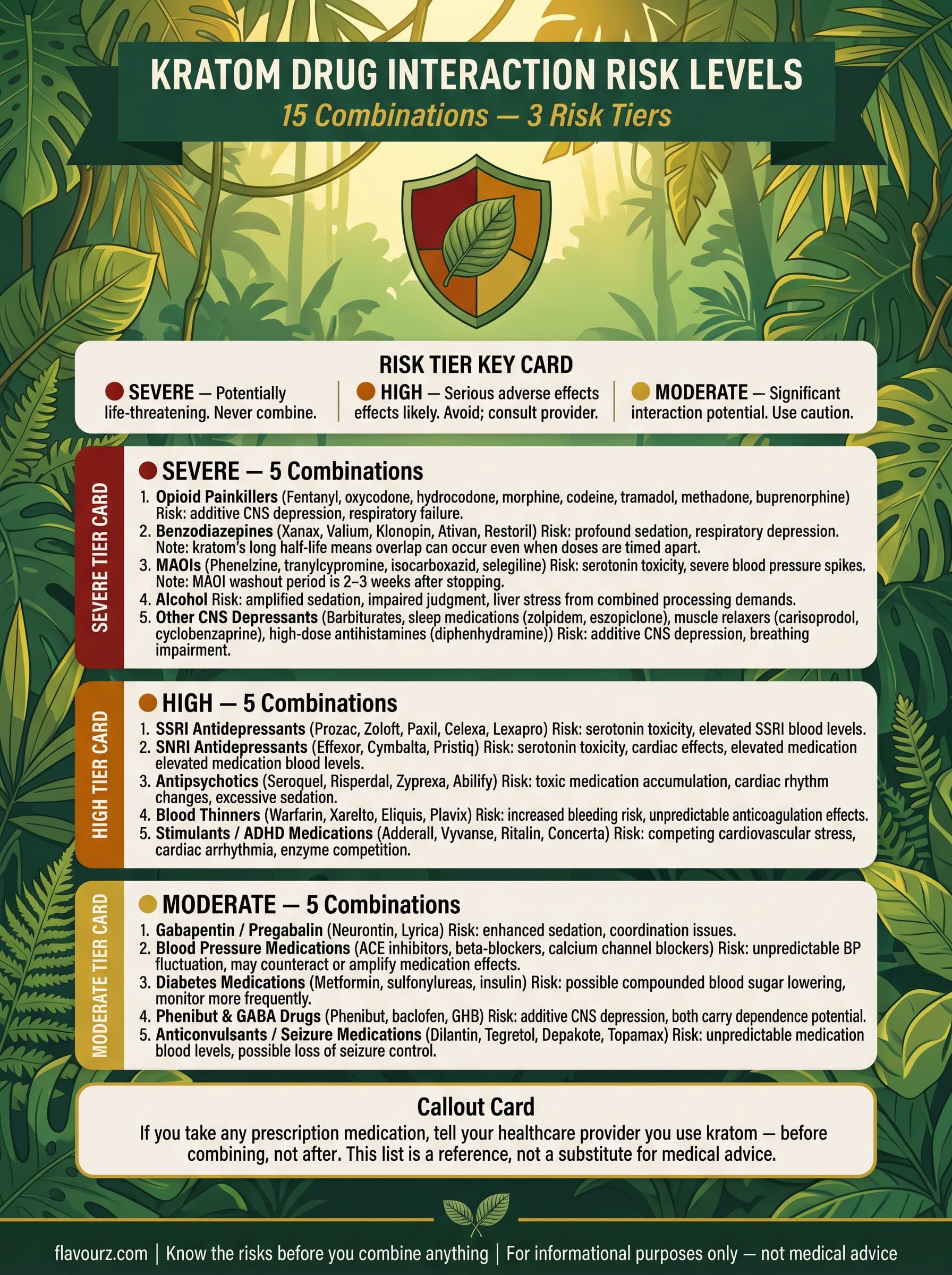
I've organized the 15 combinations into three risk tiers:
| Risk Level | Meaning | Recommendation |
|---|---|---|
| SEVERE | Potentially fatal; documented deaths | Never combine; seek medical guidance |
| HIGH | Serious adverse effects likely | Avoid; consult healthcare provider |
| MODERATE | Significant interaction potential | Use caution; discuss with doctor |
SEVERE RISK: Life-Threatening Combinations
These five combinations have documented fatalities or carry high risk of respiratory depression, cardiac events, or other life-threatening outcomes. Avoid these completely.
1. Opioid Painkillers (SEVERE)
Includes: Fentanyl, oxycodone, hydrocodone, morphine, codeine, tramadol, hydromorphone, methadone, buprenorphine
Why it's dangerous: Both kratom and prescription opioids activate mu-opioid receptors. This creates additive effects that can lead to:
- Severe respiratory depression
- Profound sedation
- Cardiovascular failure
- Death
The data: Research published in the Journal of Forensic Sciences documents fatalities where kratom was combined with hydromorphone. A 2023 study noted a significant increase in fentanyl presence in kratom-positive postmortem cases, rising from 33% in 2018 to 62% in 2022. The combined use of kratom with opioids like fentanyl appears most likely to increase fatal overdose risk.
Additional concern: Kratom inhibits CYP2D6, which metabolizes many opioids (codeine, tramadol, oxycodone). This inhibition can cause opioid blood levels to rise to toxic concentrations even at normal prescribed doses.
Bottom line: If you're prescribed opioid medications, adding kratom is genuinely dangerous. This includes "milder" opioids like tramadol and codeine.
2. Benzodiazepines (SEVERE)
Includes: Alprazolam (Xanax), diazepam (Valium), clonazepam (Klonopin), lorazepam (Ativan), temazepam (Restoril)
Why it's dangerous: Both kratom and benzodiazepines depress the central nervous system. The combination produces:
- Severe respiratory depression
- Profound sedation
- Loss of consciousness
- Potentially fatal overdose
The data: According to CDC research, over 22% of kratom-associated deaths also involved benzodiazepines. Benzodiazepines were the third most common substance found in kratom overdose victims, after fentanyl and heroin.
Why this matters: The FDA has issued black box warnings about combining opioids with benzodiazepines due to elevated death risk. Since kratom acts like an opioid at moderate-high doses, the same reasoning applies.
Common scenario: Someone takes kratom for pain, then takes their prescribed anxiety medication later without realizing the kratom alkaloids are still active (mitragynine half-life is approximately 24 hours). The result can be profound sedation, unconsciousness, and respiratory failure.
3. MAOIs - Monoamine Oxidase Inhibitors (SEVERE)
Includes: Phenelzine (Nardil), tranylcypromine (Parnate), isocarboxazid (Marplan), selegiline (Emsam, Zelapar)
Why it's dangerous: MAOIs are powerful antidepressants that block the enzyme breaking down serotonin and other neurotransmitters. Kratom also affects serotonin levels. Combining them can cause:
- Serotonin syndrome (potentially fatal)
- Severe hypertension (dangerous blood pressure spikes)
- Hyperthermia
- Cardiovascular crisis
The mechanism: MAOIs prevent the breakdown of neurotransmitters while kratom adds more serotonergic activity. The combined surge in serotonin can become life-threatening.
Additional risk: MAOIs have a long washout period. Even after stopping the medication, dangerous interactions can occur for 2-3 weeks.
4. Alcohol (SEVERE)
Why it's dangerous: Both alcohol and kratom (at moderate-high doses) are CNS depressants. The combination creates:
- Amplified sedation
- Severe impairment of motor function and judgment
- Respiratory depression
- Liver damage (both substances are hepatotoxic)
- Increased overdose risk
The data: In Florida alone, over 580 kratom-related deaths occurred over a decade, including six specifically linked to kratom and alcohol combination.
Liver concerns: Both substances are metabolized in the liver. Using them together overwhelms the organ with toxic processing demands. Research has shown both kratom and alcohol can independently cause liver damage. Combining them accelerates this risk.
Common mistake: People assume small amounts of either substance are safe together. But even moderate drinking with kratom can produce dangerous sedation levels and impaired judgment.
5. Other CNS Depressants (SEVERE)
Includes: Barbiturates (phenobarbital), sleep medications (zolpidem/Ambien, eszopiclone/Lunesta), muscle relaxers (carisoprodol/Soma, cyclobenzaprine/Flexeril), certain antihistamines (diphenhydramine/Benadryl in high doses)
Why it's dangerous: All these substances depress central nervous system activity. Combined with kratom's sedative effects at moderate-high doses:
- Respiratory depression
- Excessive sedation
- Loss of consciousness
- Impaired breathing during sleep
The mechanism: These substances have additive effects. Each one alone might cause mild sedation, but together they can push CNS depression to dangerous levels.
HIGH RISK: Serious Adverse Effects
These five combinations may not be immediately life-threatening but carry significant risk of serious adverse effects, hospitalization, or long-term harm.
1. SSRI Antidepressants (HIGH)
Includes: Fluoxetine (Prozac), sertraline (Zoloft), paroxetine (Paxil), citalopram (Celexa), escitalopram (Lexapro)
Why it's concerning: Kratom affects serotonin receptors. SSRIs increase serotonin levels. Combined with kratom's CYP2D6 inhibition (which slows SSRI metabolism), this creates serotonin syndrome risk.
Serotonin syndrome symptoms:
- Agitation and restlessness
- Rapid heart rate
- High blood pressure
- Dilated pupils
- Muscle rigidity and twitching
- Heavy sweating
- Diarrhea
- In severe cases: seizures, high fever, death
Case documentation: A case published in PMC documented serotonin syndrome in a patient combining kratom with venlafaxine (an SNRI) and quetiapine. The interaction produced both serotonin syndrome and QTc interval prolongation.
The enzyme problem: Kratom inhibits CYP2D6, which metabolizes several SSRIs (particularly fluoxetine and paroxetine). This can cause SSRI blood levels to rise significantly above intended therapeutic levels.
2. SNRI Antidepressants (HIGH)
Includes: Venlafaxine (Effexor), duloxetine (Cymbalta), desvenlafaxine (Pristiq)
Why it's concerning: Same serotonin concerns as SSRIs, plus SNRIs affect norepinephrine, adding cardiovascular stress. Venlafaxine is a CYP2D6 substrate, meaning kratom's enzyme inhibition can significantly increase its blood levels.
Documented case: The PMC case report mentioned above specifically involved kratom + venlafaxine resulting in serotonin syndrome and cardiac effects. The interaction produced supratherapeutic concentrations of venlafaxine.
3. Antipsychotics (HIGH)
Includes: Quetiapine (Seroquel), risperidone (Risperdal), olanzapine (Zyprexa), aripiprazole (Abilify)
Why it's concerning: Several antipsychotics are metabolized by CYP3A4, which kratom potently inhibits. This can cause:
- Toxic accumulation of the antipsychotic
- QTc interval prolongation (cardiac rhythm abnormality)
- Excessive sedation
- Increased side effects
Documented case: A suspected pharmacokinetic interaction between kratom and quetiapine resulted in supratherapeutic quetiapine concentrations and death. Quetiapine undergoes extensive CYP3A-mediated metabolism, so kratom's CYP3A4 inhibition allowed toxic buildup.
4. Blood Thinners (HIGH)
Includes: Warfarin (Coumadin), rivaroxaban (Xarelto), apixaban (Eliquis), clopidogrel (Plavix)
Why it's concerning: Kratom interacts with blood thinners through multiple mechanisms:
- Enzyme inhibition slows warfarin elimination (CYP1A2, CYP3A4, CYP2C9 are all involved in warfarin metabolism)
- Kratom compounds may have anticoagulant properties themselves
- Combined effect: increased bleeding risk
The problem: People on blood thinners already have bleeding concerns. Kratom can intensify anticoagulation effects, potentially leading to excessive bleeding that's difficult to stop.
Additional cardiovascular concerns: Kratom has both hypotensive and hypertensive effects depending on dose and strain. Many people taking blood thinners have underlying cardiovascular conditions that make blood pressure fluctuations particularly risky.
5. Stimulants / ADHD Medications (HIGH)
Includes: Amphetamine (Adderall), lisdexamfetamine (Vyvanse), methylphenidate (Ritalin, Concerta), cocaine, methamphetamine
Why it's concerning: Combining kratom with stimulants creates opposing cardiovascular stresses:
- Stimulants increase heart rate and blood pressure
- Kratom's sedative effects (at higher doses) push them down
- The cardiovascular system experiences unstable, competing signals
At lower doses: Kratom is also stimulating, which can compound with prescription stimulants to cause:
- Cardiac injury
- Arrhythmias
- Severe anxiety
- Seizures
Enzyme competition: Both kratom and amphetamines are metabolized by CYP2D6. When they compete for this enzyme, blood levels of one or both can rise to dangerous levels.
MODERATE RISK: Use Caution
These five combinations require careful consideration and medical guidance. They're not necessarily dangerous in all circumstances but carry meaningful interaction potential.
1. Gabapentin/Pregabalin (MODERATE)
Includes: Gabapentin (Neurontin), pregabalin (Lyrica)
Why it's concerning: Both kratom and gabapentin provide pain relief and sedation. While they work through different mechanisms, their effects sum when taken together.
Risks:
- Enhanced sedation
- Respiratory depression (though less severe than with opioids)
- Dizziness and poor coordination
- Increased dependence potential
The concern: Gabapentin misuse has increased significantly, and its involvement in opioid overdoses has forced recognition that it's not as safe as previously thought. Combining it with kratom (which also has dependence potential) increases both risk of adverse effects and dependence.
2. Blood Pressure Medications (MODERATE)
Includes: ACE inhibitors, beta-blockers, calcium channel blockers, diuretics
Why it's concerning: Kratom has direct effects on blood pressure that vary by dose and strain:
- Low doses may increase blood pressure (stimulant effect)
- Higher doses may decrease blood pressure (sedative effect)
The problem: People prescribed blood pressure medications already have cardiovascular concerns. Kratom's unpredictable BP effects can:
- Counteract the medication (making it less effective)
- Add to the medication's effect (causing dangerous drops in BP)
- Create unstable blood pressure swings
For people with high blood pressure: Even without medication, taking kratom carries increased risk of stroke or heart attack. The combination with BP medications adds unpredictability to an already sensitive situation.
3. Diabetes Medications (MODERATE)
Includes: Metformin, sulfonylureas, insulin
Why it's concerning: Some kratom alkaloids may have hypoglycemic (blood sugar lowering) effects. Combined with diabetes medications:
- Blood sugar could drop dangerously low
- Symptoms of hypoglycemia might be masked by kratom's sedation
- Metabolic competition could affect medication effectiveness
Monitoring recommendation: If you use kratom and take diabetes medications, monitor blood sugar more frequently and watch for hypoglycemia symptoms (shakiness, sweating, confusion, rapid heartbeat).
4. Phenibut and Other GABA Drugs (MODERATE)
Includes: Phenibut, baclofen, GHB
Why it's concerning: Phenibut is a GABA-B receptor agonist (CNS depressant) often marketed alongside kratom in nootropic circles. The combination:
- Creates agonistic interaction (both depress CNS)
- Increases respiratory depression risk
- Both substances have dependence potential
- Both have withdrawal syndromes that can be severe
The problem: Both kratom and phenibut are unregulated and often purchased together by people seeking mood or anxiety support. Neither has quality control, and combining them multiplies risks while making dosing unpredictable.
5. Anticonvulsants/Seizure Medications (MODERATE)
Includes: Phenytoin (Dilantin), carbamazepine (Tegretol), valproic acid (Depakote), topiramate (Topamax)
Why it's concerning: Many anticonvulsants are CYP enzyme substrates. Kratom's enzyme inhibition can affect their blood levels unpredictably:
- Some may rise to toxic levels
- Others may become less effective
- Either outcome is dangerous for seizure control
Seizure risk: Kratom itself has been associated with seizures in some case reports, particularly at high doses or in withdrawal. For someone with a seizure disorder, this adds complexity to an already delicate medication balance.
Complete Interaction Risk Table
| # | Drug Class | Risk | Primary Danger |
|---|---|---|---|
| 1 | Opioid painkillers | SEVERE | Respiratory depression, overdose death |
| 2 | Benzodiazepines | SEVERE | CNS depression, respiratory failure |
| 3 | MAOIs | SEVERE | Serotonin syndrome, hypertensive crisis |
| 4 | Alcohol | SEVERE | CNS depression, liver damage |
| 5 | Other CNS depressants | SEVERE | Respiratory depression, sedation |
| 6 | SSRIs | HIGH | Serotonin syndrome |
| 7 | SNRIs | HIGH | Serotonin syndrome, cardiac effects |
| 8 | Antipsychotics | HIGH | Toxic buildup, QTc prolongation |
| 9 | Blood thinners | HIGH | Excessive bleeding |
| 10 | Stimulants/ADHD meds | HIGH | Cardiovascular stress, arrhythmias |
| 11 | Gabapentin/Pregabalin | MODERATE | Enhanced sedation, dependence |
| 12 | Blood pressure medications | MODERATE | Unpredictable BP effects |
| 13 | Diabetes medications | MODERATE | Hypoglycemia risk |
| 14 | Phenibut/GABA drugs | MODERATE | CNS depression, dependence |
| 15 | Anticonvulsants | MODERATE | Altered seizure control |
Warning Signs of a Drug Interaction
If you're using kratom with any medication, watch for these warning signs that may indicate a dangerous interaction:
Serotonin Syndrome Signs (EMERGENCY)
- Agitation, restlessness, confusion
- Rapid heart rate
- High blood pressure
- Dilated pupils
- Muscle twitching, rigidity, or tremors
- Heavy sweating
- Diarrhea
- High fever
If you experience multiple symptoms: Seek emergency medical care immediately.
CNS Depression Signs (EMERGENCY)
- Extreme drowsiness
- Slow or shallow breathing
- Bluish lips or fingertips
- Confusion or disorientation
- Loss of consciousness
- Unresponsiveness
If you observe these in yourself or others: Call 911 immediately.
Cardiovascular Warning Signs
- Chest pain or tightness
- Racing heart or palpitations
- Irregular heartbeat
- Severe headache (possible BP spike)
- Fainting or near-fainting
Medication Toxicity Signs
- Unusual side effects from your regular medications
- Side effects that seem stronger than normal
- Nausea, vomiting, or stomach pain
- Vision changes
- Ringing in ears
- Jaundice (yellowing of skin or eyes) - indicates liver stress
How to Stay Safe
Tell Your Healthcare Provider
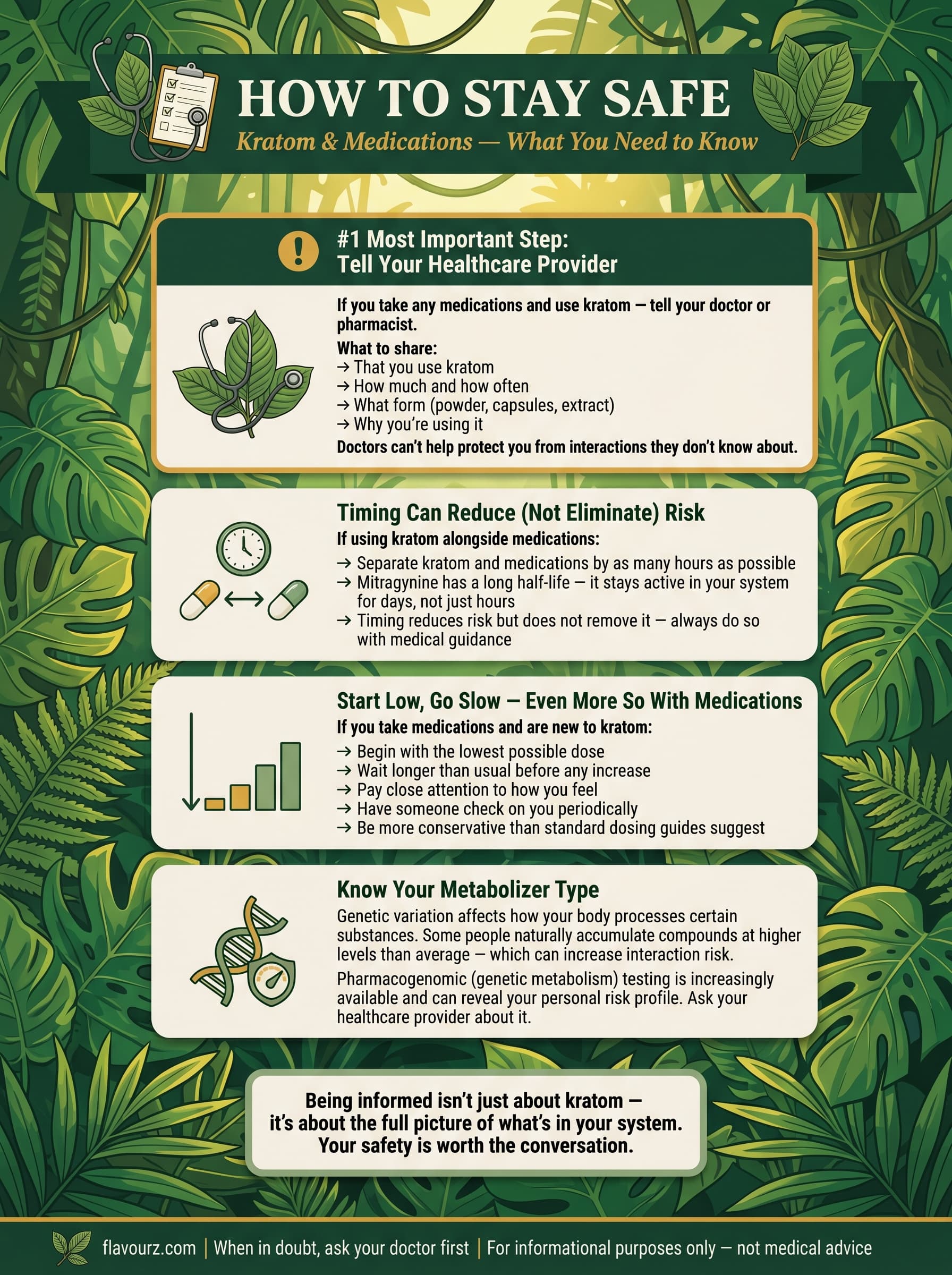
This is the single most important takeaway from this article: if you're taking kratom and you're on any medication, tell your healthcare provider.
Even if it's uncomfortable. Even if you're worried about judgment. Doctors can't protect you from interactions they don't know about. Most are more understanding than you might expect, and many are becoming familiar with kratom as its use grows.
What to tell them:
- That you use kratom
- Approximately how much and how often
- What form (powder, capsules, extract)
- Why you're using it
Timing Matters
If you must use kratom while taking medications (ideally under medical guidance), timing can reduce but not eliminate interaction risk:
- Separate kratom and medications by as many hours as possible
- Remember mitragynine has a half-life of approximately 24 hours, meaning it stays in your system for days
- For more information on kratom timing, see our guide on how long kratom effects last
Start Low, Go Slow
If you're starting kratom and take any medications:
- Begin with the lowest possible kratom dose
- Wait longer than usual before increasing
- Pay close attention to how you feel
- Have someone check on you periodically
For general kratom dosage guidance, start even more conservatively than usual when medications are involved.
Know Your CYP2D6 Status
Some people are "poor metabolizers" of CYP2D6 substrates due to genetic variation. About 7% of Caucasian populations have this trait. If you're a poor metabolizer:
- Medications metabolized by CYP2D6 already accumulate in your system
- Adding kratom (a CYP2D6 inhibitor) compounds this problem
- You face higher interaction risk than average
Genetic testing (pharmacogenomic testing) can reveal your metabolizer status. This is increasingly available and covered by some insurance plans.
Frequently Asked Questions
What medications should not be taken with kratom?
The most dangerous medications to combine with kratom are: opioid painkillers, benzodiazepines, MAOIs, other CNS depressants (barbiturates, sleep aids, muscle relaxers), alcohol, SSRIs, SNRIs, antipsychotics, blood thinners, and stimulants. Any medication metabolized by CYP3A4 or CYP2D6 enzymes carries interaction potential.
Can you take kratom with antidepressants?
Kratom with antidepressants carries serotonin syndrome risk, especially with SSRIs, SNRIs, and MAOIs. Kratom affects serotonin receptors and inhibits CYP2D6, which metabolizes several antidepressants. MAOIs are the most dangerous combination. SSRIs and SNRIs carry moderate-high risk. If you take antidepressants, consult your prescriber before using kratom.
Is it safe to mix kratom and alcohol?
No. Mixing kratom and alcohol is dangerous. Both substances depress the central nervous system, and the combination can cause severe sedation, respiratory depression, and liver damage. Over 580 kratom-related deaths in Florida over a decade included six specifically linked to kratom-alcohol combination.
Can kratom cause serotonin syndrome?
Yes. Mitragynine affects serotonin receptors. When combined with other serotonergic substances (SSRIs, SNRIs, MAOIs, tramadol, certain opioids), kratom can contribute to serotonin syndrome. Symptoms include agitation, rapid heart rate, high blood pressure, muscle rigidity, sweating, and in severe cases, seizures and death.
What are the signs of a kratom drug interaction?
Warning signs include: unusual drowsiness, slow or shallow breathing, rapid heart rate, high blood pressure, muscle rigidity or twitching, confusion, agitation, nausea, vision changes, chest pain, or medication side effects that seem stronger than normal. Serotonin syndrome and CNS depression are medical emergencies requiring immediate care.
Final Thoughts
Understanding kratom drug interactions isn't about fear or avoiding kratom entirely. It's about informed use. The key takeaways:
- Kratom isn't pharmacologically inert. It contains active alkaloids that interact with liver enzymes, receptors, and other medications.
- The most dangerous combinations are sedatives. Opioids, benzodiazepines, alcohol, and other CNS depressants compound kratom's effects dangerously.
- Enzyme inhibition matters. Kratom's CYP3A4 and CYP2D6 inhibition can affect blood levels of many medications.
- Tell your doctor. This single action is more protective than any other precaution.
At Flavourz Kratom, we believe in transparent education. We've been serving customers since 1999 because we prioritize safety alongside quality. If you're new to kratom, start with our beginner's guide and always start with low doses, especially if you take any medications.
For more information on kratom's active compounds and how they work, explore our educational resources.
Disclaimer: This information is for educational purposes only and is not medical advice. These statements have not been evaluated by the FDA. Kratom is not intended to diagnose, treat, cure, or prevent any disease. Always consult a qualified healthcare provider before using kratom, especially if you take prescription medications. Must be 21+ to purchase. Not available in all states.

Leave a comment