
Kratom for Hangover Relief: Does It Work? Strains & Safety
Last Updated: April 2026
There's no scientific evidence that kratom helps with hangovers. Some users report it masks symptoms like headaches and fatigue, but kratom doesn't address the root causes of hangovers: inflammation, acetaldehyde toxicity, and dehydration. Using kratom while hungover adds extra strain on your liver and may worsen dehydration. If you choose to try it anyway, wait until alcohol is fully metabolized (at least 12-24 hours), use a low dose, and prioritize hydration.
I get this question constantly from customers at Flavourz Kratom. After 25 years in this business and 5 years of personal kratom experience, here's my honest take: kratom isn't a hangover cure, and anyone telling you otherwise is overselling it.
That said, For morning relief specifically, white strains offer energizing properties - check our complete white bali strain analysis for detailed morning use recommendations. some people do use kratom for hangover symptoms, and I want to give you the complete picture so you can make an informed decision.
What Actually Causes a Hangover?
Before we talk about whether kratom helps, you need to understand what a hangover actually is. It's not just dehydration, despite what you've heard.
According to the National Institute on Alcohol Abuse and Alcoholism, hangovers result from multiple factors working together:
The Main Hangover Mechanisms
- Inflammation: Alcohol triggers an immune response that causes systemic inflammation throughout your body. A 2024 review in Alcohol, Clinical and Experimental Research concluded that inflammation and oxidative stress are the primary causes of hangover symptoms.
- Acetaldehyde toxicity: When your liver breaks down alcohol, it first converts it to acetaldehyde, a toxic compound that causes nausea, sweating, rapid pulse, and general malaise.
- Dehydration: Alcohol is a diuretic, increasing urine production and depleting fluids and electrolytes.
- Sleep disruption: Alcohol fragments your sleep architecture, preventing restorative deep sleep even if you pass out for 8 hours.
- GI irritation: Alcohol directly irritates your stomach lining and increases acid production.
- Blood sugar drops: Alcohol interferes with glucose production, leading to weakness and fatigue.
Here's what many people don't realize: recent research (Mackus et al., 2024) found that dehydration alone doesn't cause hangovers, and drinking water doesn't prevent them. The inflammation and metabolic disruption are more significant factors.
Does Kratom Actually Help Hangovers?
Honest answer: there's no scientific evidence that kratom helps with hangovers. Zero studies have examined this specific use.
What we have is anecdotal reports, and they're mixed.
What Some Users Report
People who claim kratom helps their hangovers typically describe:
- Reduced headache intensity
- Improved energy levels (fighting that drained, sluggish feeling)
- Better mood (countering the "hangxiety")
- Reduced body aches
These reports make sense pharmacologically. Kratom's alkaloids do interact with receptors involved in pain perception and mood. For more on how this works, see our article on kratom's active compounds.
The Problem: Masking, Not Healing
Here's my concern based on years of watching customers use kratom: even if kratom makes you feel better, it's masking symptoms, not addressing the underlying issues.
Kratom doesn't:
- Reduce inflammation
- Speed up acetaldehyde metabolism
- Rehydrate you (it actually does the opposite)
- Restore disrupted sleep
- Repair GI irritation
You might feel functional, but your body is still dealing with the same metabolic stress.
Safety Concerns: Why This Combination Matters
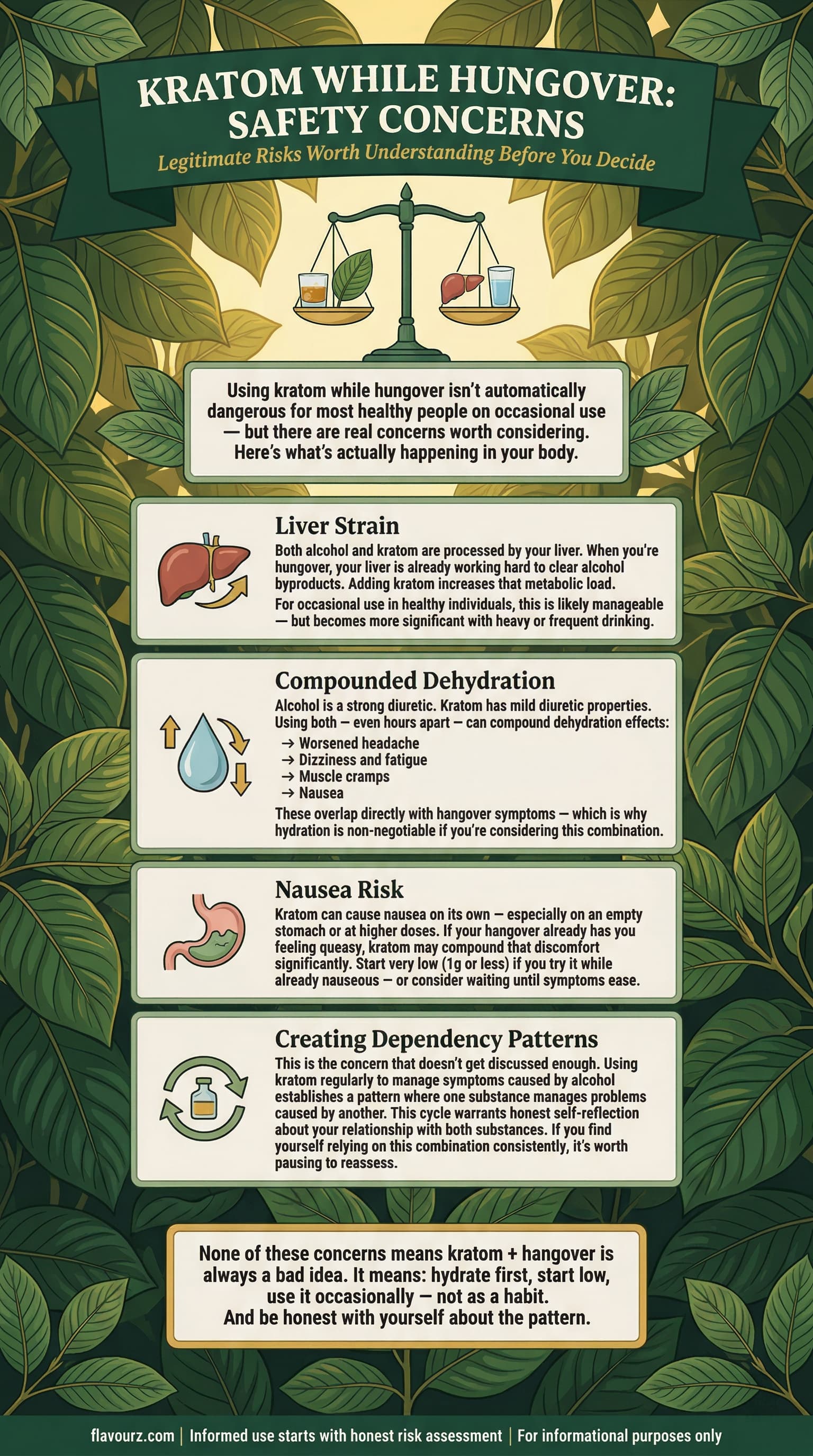
Using kratom while hungover isn't risk-free. Here are the legitimate concerns:
Liver Strain
Both alcohol and kratom are metabolized by your liver. When you're hungover, your liver is already working overtime to process alcohol byproducts and clear toxins. Adding kratom to the mix increases the metabolic burden.
Is this dangerous for occasional use? Probably not for most healthy people. But it's worth considering, especially if you drink heavily or frequently. For more context, see our article on kratom and liver health.
Compounded Dehydration
Kratom has mild diuretic properties. Alcohol is a stronger diuretic. Using both substances (even hours apart) can compound dehydration effects.
Symptoms of dehydration include:
- Worsened headache
- Dizziness
- Muscle cramps
- Confusion
- Fatigue
Notice how these overlap with hangover symptoms? That's why hydration is critical if you're considering kratom while hungover.
Nausea Risk
Kratom can cause nausea, especially on an empty stomach or at higher doses. If your hangover already has you feeling queasy, kratom might push you over the edge.
I've heard from plenty of customers who tried kratom for a hangover and ended up feeling worse because the nausea compounded.
Creating Dependency Patterns
This is the concern that doesn't get talked about enough.
If you regularly drink and then use kratom to manage hangover symptoms, you're establishing a pattern where substances solve problems caused by other substances. This cycle can lead to psychological or physical dependence on either or both.
About 2% of kratom users report using it specifically to reduce alcohol consumption, and nearly 1 in 5 use it for alcohol-related reasons. While some find this helpful, it requires honest self-assessment about your relationship with both substances.
If You're Going to Try It: Practical Guidelines
I'm not going to pretend people won't use kratom for hangovers despite the caveats. So here's how to approach it more safely:
Timing Matters
| Scenario | Recommendation | Why |
|---|---|---|
| Still feeling drunk | Do not take kratom | Alcohol still in system, dangerous interaction risk |
| 6-8 hours after drinking | Proceed with caution | Some alcohol may remain; use minimal dose |
| 12-24 hours after drinking | Safer window | Alcohol metabolized; standard precautions apply |
| 24+ hours after drinking | Normal use | Alcohol cleared; no interaction concerns |
For detailed information on the kratom-alcohol interaction, see our complete guide on kratom and alcohol safety.
Hydration Protocol
If you're taking kratom while hungover, aggressive hydration is non-negotiable:
- Drink at least 16-24 oz of water BEFORE taking kratom
- Add electrolytes (sports drinks, coconut water, or electrolyte packets)
- Continue drinking water throughout the day
- Monitor urine color; aim for pale yellow
Dosing Guidance
Use less than your normal dose. Your body is already stressed.
- If you're new to kratom: Don't start during a hangover. Your body can't give you accurate feedback about how kratom affects you.
- If you're experienced: Use 50-75% of your typical dose
- Start low: 1-2 grams maximum for most people
- Wait longer: Give it 60-90 minutes before considering more
For complete dosing information, see our kratom dosage guide.
Best Kratom Strains for Hangover Symptoms
If you're going to use kratom for hangover relief, strain selection matters. Different veins offer different effects that may help with specific symptoms.
For Fatigue and Low Energy
Best choice: White vein strains
If your main hangover symptom is feeling drained and exhausted, white vein kratom offers the most energizing effects. White Maeng Da is particularly popular for its clean energy boost without excessive sedation.
White strains work by providing mild stimulation, improved mental clarity, and mood enhancement. Users often compare the effect to strong coffee but smoother.
Dose suggestion: 1-2 grams (lower end for hangover use)
For Headache and Body Aches
Best choice: Red vein strains
Red vein kratom is known for more relaxing, body-focused effects. Red Bali and Red Borneo are popular choices for physical discomfort.
The trade-off: red strains can be sedating. If you need to function and be productive, this might not be ideal. But if you have a lazy recovery day planned, red strains may provide more comfort.
Dose suggestion: 1-3 grams (higher doses increase sedation)
For Balanced Recovery
Best choice: Green vein strains
Green Maeng Da and Green Borneo offer a middle ground: some energy, some physical comfort, and mood improvement without strong sedation.
If you're not sure which symptom is bothering you most, or you have a mix of fatigue and discomfort, green strains are usually the safest bet.
Dose suggestion: 1-2.5 grams
Strain Selection Summary
| Primary Symptom | Recommended Vein | Specific Strains | Effects Profile |
|---|---|---|---|
| Fatigue/exhaustion | White | White Maeng Da, White Thai | Energy, focus, mood lift |
| Headache/body aches | Red | Red Bali, Red Borneo | Relaxation, physical comfort |
| Mixed symptoms | Green | Green Maeng Da, Green Borneo | Balanced energy + comfort |
| Anxiety/"hangxiety" | Red or Green | Red Bali, Green Malay | Calming, mood support |
Can Kratom Cause Its Own Hangover?
Yes. This is something people don't always consider.
Kratom can cause hangover-like symptoms, especially with:
- High doses
- Dehydration during use
- Poor quality products
- Use late at night (disrupts sleep)
Kratom Hangover Symptoms
- Headache (reported in 40-60% of cases)
- Fatigue and grogginess
- Nausea
- Brain fog
- Dry mouth
Notice the overlap with alcohol hangover symptoms? If you take kratom while already hungover and experience these effects, you could end up feeling worse, not better.
This is why dose matters so much. Low doses are far less likely to cause next-day effects than high doses.
Better Alternatives for Hangover Recovery
I sell kratom for a living, but I'll be straight with you: for hangover recovery specifically, there are better first-line approaches.
What Actually Helps Hangovers
- Time: The only proven "cure" for a hangover is waiting for your body to process everything. Sleep helps.
- Hydration + electrolytes: While this doesn't prevent hangovers, it does help with dehydration symptoms.
- Food: Eating helps stabilize blood sugar and provides nutrients your body needs to recover.
- NSAIDs: Ibuprofen or aspirin can help with headaches and inflammation. (Avoid acetaminophen/Tylenol, which stresses the liver.)
- Ginger: Genuinely helps with nausea for many people.
- Light exercise: A short walk or gentle movement can improve blood flow and mood.
When Kratom Might Make Sense
Kratom may be worth considering when:
- You've already tried the basics (hydration, food, rest) and still feel rough
- You're an experienced kratom user who knows how your body responds
- Enough time has passed since drinking (12-24+ hours)
- You're adequately hydrated
- You need to function and the fatigue or discomfort is preventing that
It's a tool for symptom management, not a first-line treatment.
Warning Signs: When Not to Use Kratom
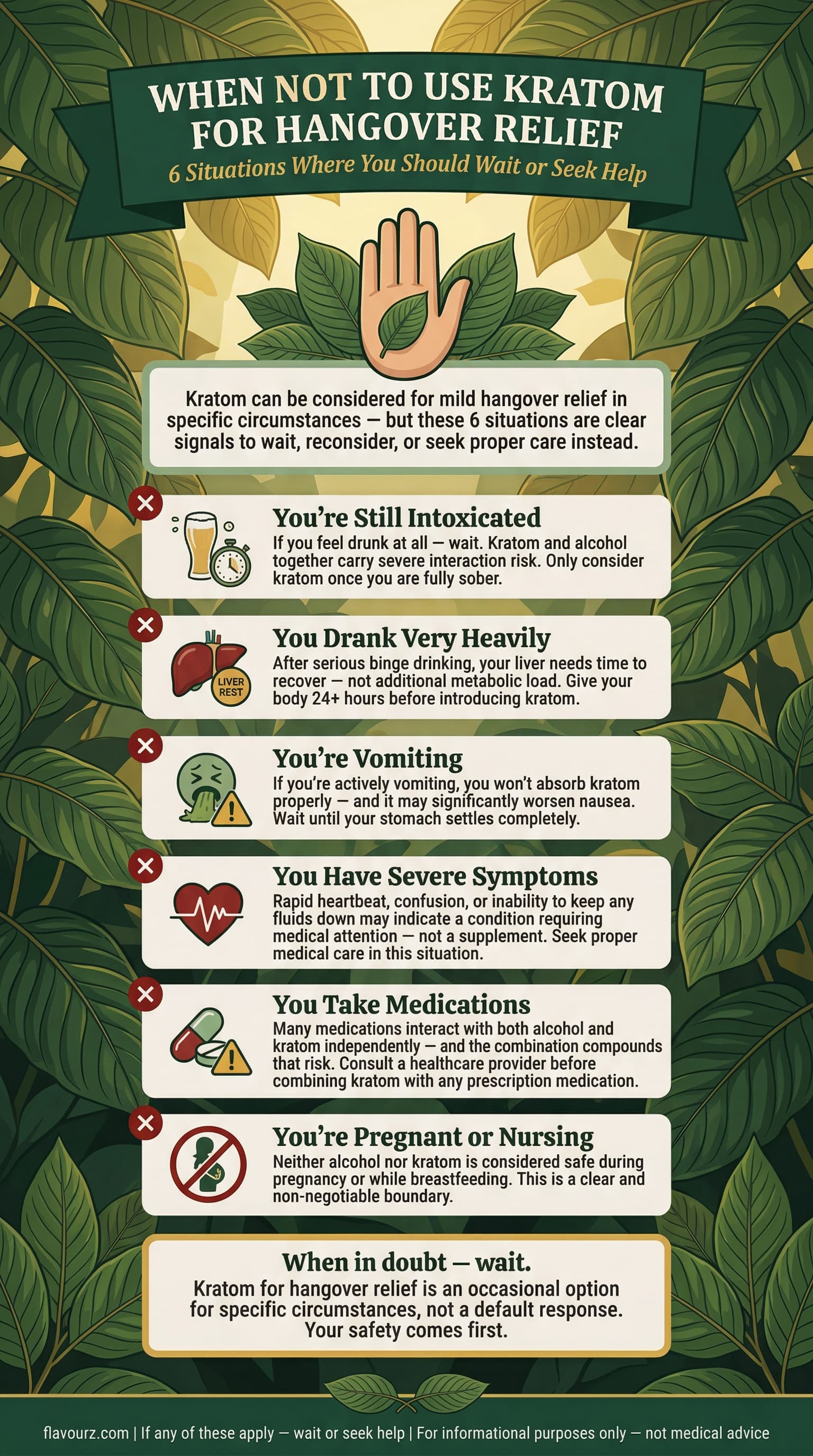
Do NOT use kratom for hangover relief if:
- You're still intoxicated: If you feel drunk at all, wait.
- You drank heavily: After serious binge drinking, your liver needs rest, not more work.
- You're vomiting: You won't absorb the kratom properly, and it may worsen nausea.
- You have severe symptoms: Rapid heartbeat, confusion, or inability to keep fluids down may indicate alcohol poisoning. Seek medical help.
- You take medications: Many medications interact with both alcohol and kratom. Consult a healthcare provider.
- You're pregnant or nursing: Neither alcohol nor kratom is safe during pregnancy.
The Honest Bottom Line
Can kratom help with hangover symptoms? Some people report it does, particularly for fatigue and general discomfort.
Should you use kratom for hangovers? That's a personal decision, but go in with realistic expectations:
- It's not a cure. Kratom doesn't address the underlying causes of hangovers.
- It adds liver strain. Your liver is already working hard; kratom adds to that burden.
- It can worsen dehydration. Aggressive hydration is essential.
- It might make you feel worse. Kratom can cause nausea, especially on a sensitive stomach.
- Timing matters. Wait until alcohol is metabolized (12-24 hours is safer than 6-8).
- Dose conservatively. Use less than your normal amount.
If you're looking for quality kratom from a vendor serving customers since 1999, explore our kratom powder collection. For new users, I'd recommend reading our beginner's guide first, though don't start kratom during a hangover.
Frequently Asked Questions
Does kratom help with hangovers?
There's no scientific evidence that kratom helps hangovers. Some users report it masks symptoms like headaches and fatigue, but it doesn't address underlying causes like inflammation, acetaldehyde toxicity, or dehydration. It may provide temporary symptom relief for some people.
Can kratom make a hangover worse?
Yes. Kratom can cause nausea, dehydration, and its own hangover-like symptoms. If you take it while already feeling queasy or dehydrated, you may feel worse. Low doses and adequate hydration reduce this risk.
What is the best kratom strain for hangovers?
White vein strains like White Maeng Da are best for fighting fatigue and low energy. Red vein strains like Red Bali help more with headaches and body aches. Green strains offer balanced effects for mixed symptoms.
How long should I wait after drinking to take kratom?
Wait at least 12-24 hours after drinking for the safest approach. At minimum, wait until you no longer feel any alcohol effects (at least 6-8 hours). Never take kratom while still intoxicated.
Does kratom dehydrate you?
Yes, kratom has mild diuretic effects. This is why hydration is especially important when using kratom after drinking, since alcohol is also a diuretic. Drink plenty of water with electrolytes.
Can kratom cause a hangover?
Yes. Kratom can cause next-day effects including headache, fatigue, nausea, and brain fog, especially with high doses, dehydration, or low-quality products. These symptoms overlap with alcohol hangovers.
Is it safe to take kratom after drinking?
It's not recommended to take kratom while alcohol is still in your system. Once alcohol is metabolized (typically 12-24 hours after heavy drinking), kratom can be used with normal precautions: hydrate well, use low doses, and listen to your body.
What's the best way to cure a hangover?
Time is the only proven cure. Supporting strategies include hydration with electrolytes, eating nutrient-rich food, rest, NSAIDs like ibuprofen for headaches (avoid acetaminophen), and ginger for nausea. Kratom may mask symptoms but doesn't speed recovery.
Disclaimer: This information is for educational purposes only. These statements have not been evaluated by the FDA. Kratom is not intended to diagnose, treat, cure, or prevent any disease or hangover. Combining kratom with alcohol or using it after heavy drinking carries risks. Consult a healthcare provider if you have concerns. Must be 21+ to purchase. Not available in all states.

Leave a comment